Showing posts with label Electronic. Show all posts

Tuesday, 16 August 2011

Schiller: Desire

The Sonic Music Review recently featured a review of 'Let Me Love You' here, the first song on Schiller's 2008 album 'Desire.' At this point we are pleased to offer a full feature which covers the rest of this remarkable album. For those unfamiliar with Schiller, the German artist typically writes in an uncommon methodology which combines elements of post-trance with ambient music. This form of writing, which is comparable to Enigma who rose to fame during the 1990's, is typically mislabeled as 'New Age Music' largely due to the sound world such releases typically create, a label not endorsed by the artist. This album features some of Schiller's finest work to date, featuring several collaborations with other artists and singers.

Schiller: Desire
Desire - Schiller

The album opens with the beautiful rendition of 'Let Me Love You,' previously featured here, before moving on to the first of the instrumental works on the album, 'Heartbeat,' which reader's could be forgiven for confusing with instrumental Enigma or even Tangerine Dream output. This track illustrates well the ability of Schiller to combine rich synthetic textures with subtle moving sequences to create a commendable ambient inspired work. The musical references to ambient composers later turn to proponents of dance/chillout music - the track 'Breathe' for instance, which features the singer September, is highly reminiscent of Chicane's output, particularly 'Offshore' which appears on their 'Best Of' album reviewed here. 

Moving to a later track 'Ile Aye,' the ties to the Enigma musical project are revealed most clearly, even going as far as to include elements of foreign chant which typified Engima's output which combined this with a very similar sound world exhibited here. Of all the material on offer here however, 'Lonely,' which like 'Ile Aye' features the female singer Stephenie Coker, shines as one of the album's highlights. To some listeners, the slight cliched writing which audibly panders to the pop music aesthetic may detract from the song, but it remains a well executed example of Schiller's most commercial output. 

It is curious that Klaus Schultze, best known as a prolific electronic artist and, for a time, member of the German band Tangerine Dream whose releases have frequently adorned the pages of The Sonic Music Review, features as a collaborator with Schiller on the track 'Zenith.' This track exemplifies a convergence of the two artist's already comparable styles in a manner that many fans of ambient electronica will highly appreciate.


From the highlights of Schiller's collaborative songwriting with Kim Sanders, Stephenie Coker et al. to the instrumental works such as the hauntingly nostalgic 'Wunschtraum,' this album contributes greatly to the ever expanding repertoire in the burgeoning Ambient Post-Trance musical tradition and is well worth a listen.
Save on Delicious

Tuesday, 9 August 2011

Tangerine Dream: Winter In Hiroshima


Following three previous releases in Tangerine Dream’s Five Atomic Seasons series, ‘Winter In Hiroshima,’ the fourth instalment, represents the penultimate release in the series. This release follows ‘Autumn In Hiroshima,’ retaining elements the sombre and dark style of writing which characterised that album, interjected with a greater sense of urgency and pace to the work. Stylistically this release sees noticeable development from its predecessor as the story of the Japanese businessman which approached the group’s youth throughout 1945 and the dropping of the first atomic bomb in Hiroshima nears its conclusion.
Tangerine Dream: Winter In Hiroshima
Winter In Hiroshima - Part Four From The Five Atomic Seasons - Tangerine Dream


‘Winter In Hiroshima’ opens with ‘Transition’ which through its writing style trivialises the premise of the work to paradoxically induce a greater sense of dread when this is considered as part of the larger work. This is followed by the third and final reference to Ayumi in the series in ‘Ayumi’s Loom.’ As no explanation of the programme is provided by the group other than brief outlines in ‘Springtime In Nagasaki’’s liner notes, the significance of Ayumi is unknown but one can assume that on the basis that no other character receives reference throughout the series, Ayumi is central to the story governing the work. ‘Ayumi’s Loom’ itself illustrates the more urgent and upbeat style of writing seen at several points in this release, adorned with long-running sequences, unusual percussive electronic timbres and further abstract instrumentation.

‘Outlook’ sees a Koto-like lead meandering through various harmonic constructs of which a tonal ambiguity, aural uncertainty regarding a major or minor tonal centre, creates an aurally fascinating quality to the track. This track is possibly the most ambient in style to appear on this album, which is in itself a reference to the charming naïve optimism expressed by the ambient style in several tracks from the first album in the series, ‘Springtime In Hiroshima.’


As ‘Glowing Vision’ signifies the beginning of the concluding track to this album, the listener is plunged into great uncertainty, established by the brooding harmonic and timbral elements in this track. As the track concludes, the tone is set for the beginning of ‘The Endless Season,’ the final instalment in the Five Atomic Seasons series which interestingly references ‘Trauma’ in the third chapter, ‘Autumn In Hiroshima,’ rather than any material from the release featured here.


View Tracklisting

Save on Delicious

Two Tigers: Dunes

Following a liberal amount of twitter prowling, The Sonic Music Review is pleased to feature 'Dune' by Two Tigers having stumbled across their profile and link to their Soundcloud page here. Two Tigers are a musical act from Chile producing quite a commercial, polished selection of tracks, clearly influenced from 80's acts such as Depeche Mode but stylistically are far more akin to a combination of MGMT and Daft Punk.

Two Tigers - Dunes by twotigersmusic

The track featured here, 'Dunes,' illustrates the act's notable proficiency with synthetic instrumentation within a pseudo-'pop' setting. The piece begins with a simple, clean and crisp guitar riff with subtle use of stutter editing to add additional interest, used in moderation so as not to be intrusive. Layered vocals quickly enter but one of the best moments in this track is the first exposition of synthetic instrumentation which comes soon after.

The orchestration seen throughout, with particular regard to the synthetic timbres, is very accomplished for an independent act, each musical element has its place within the track and within the mix and has been very well crafted. There is a great temptation by many artists to create a single, homogenous wash of sound but the production and great care in orchestrating this track has paid great dividends in making such a varied arrangement which draws the listener in.

As the arrangement continues, the listener is treated to an instrumental section in place of a second verse which further exemplifies Two Tigers' talent in their craft, the keyboardist clearly in their element at this point. This continues before a segue into a repeat of the first verse and chorus, whereupon the piece reaches its conclusion at just over three minutes. The adaptation of the typical three-minute pop song is again a credit to Two Tigers, proving to be highly effective, although a more convincing ending could be achieved. Nonetheless, this is one of the best songs that The Sonic Music Review has had the pleasure of discovering and has been a pleasure to feature for our readers.

For more information on Two Tigers, you can visit their official website here. As ever, if any of our readers represent an independent artist and would like to submit music, please get in touch or find us on Twitter @SubsonicWinter.
Save on Delicious

Sunday, 7 August 2011

Tangerine Dream: Trauma

Given that several features in The Sonic Music Review make particular mention of ‘Trauma,’ the opening track of Tangerine Dream’s 2009 album ‘Autumn In Hiroshima,’ it seemed pertinent to give this track a dedicated reviewed in order to fully cover the musical details contained therein. In this reviewer’s opinion, ‘Trauma’ represents some of the finest writing by the band throughout their independent years, incorporating advanced timbal construction, use and consequence of thematic material and noteworthy production, an element often neglected when considering contemporary electronic music.

When constructing opinions of this piece, a keen listener would be well advised to listen to the material in Tangerine Dream’s Five Atomic Seasons series which precedes this, such as the ‘Summer In Nagasaki’ album or ‘11:02 Am,’ the concluding track of the aforementioned album. As the introductory section in ‘Trauma’ exhibits a development of the musical character seen in preceding material from the series.

The track begins with an extended introduction of processed bell timbres, breathy resonances and glistening sonic reflections. As the piece opens, a steady sequence reminiscent of a music box is introduced alongside melodic material which borrows timbrally from ‘Persistence Of Memory Part Four’ in the first album of the Five Atomic Seasons, ‘Springtime In Nagasaki.’

Following the extended introduction, which lasts more than two minutes comes the A section, in which large amounts of musical material is introduced. Interestingly, the melodic material of this section does not announce itself through typical musical conventions - the introduction concludes with a mighty burst of synthetic brass-like timbres but the initial exposition of melodic material begins gradually within the functioning harmony rather than as discrete musical elements.

The B section sees an accomplished change of character to a far darker and urgent style of writing, employing various bass pedals and ostinatos alongside new percussion elements hitherto unseen. The piece sees a well contoured progression between B and C sections, ultimately returning back again before revisiting some of the earliest musical material of the track. Along with the production, the writing and in particular the sense of ‘flow’ throughout this piece makes it truly remarkable, one of the bands most accomplished contemporary work.
Save on Delicious

Friday, 5 August 2011

The Pet Shop Boys: 'The Clock 10/11/12'

The Pet Shop Boys are well known as early proponents of the 80’s synthpop movement who throughout their career have released a number of charting records largely in their inimitable disco influenced synthpop style. ‘The Most Incredible Thing’ is arguably the duo’s most unusual project - a musical soundtrack choreographed to a ballet. As such, the release combines more contemporary Pet Shop Boys writing with orchestral elements previously alluded to in passing reference from their popular music throughout the years.

The Pet Shop Boys: The Most Incredible Thing

The Most Incredible Thing - Pet Shop Boys


Of the tracks on the album, ‘The Clock 10/11/12’ proves to be one of the most interesting and so is focussed upon here. This particular track aptly combines the contemporary dance-influenced electronic writing with the pompous orchestral writing which are both seen throughout this album, beginning with purely electronic elements and after approximately three minutes segueing into a large ‘oom-pah’ score. Without viewing the ballet choreography, one cannot comment on the interplay between the music and dance at this point, however it is not unreasonable to suggest that this point depicts a more rural setting. At any rate, the music suggests very clear imagery and is commendable as such.

The track opens with sustained harmonies from some of the several synth lines which feature in this track, accompanied by several samples manufactured for their electronic connotations. At this point, the samples is question, given their prominence, could benefit from more advanced sonic processing akin to Tangerine Dream’s notable proficiency in this area. While considerations of timbre take place, the drum sequencing and timbre proves a noteworthy mention, being unlike most of the duo’s previous output.


Following the introduction comes the addition of additional musical elements, including a sequenced bassline and an accompanied off-beat synthesiser line which features very accomplished rhythmic interplay. The arrangement also is a testament to the expertise garnered by Tennant and Lowe throughout their career, bringing great variety to the arrangement through the variation of instrumentation which takes place.

Of the 21 tracks available on ‘The Most Incredible Thing,’ this certainly proves well worth a listen.
Save on Delicious

Thursday, 28 July 2011

Pete Burns: Never Marry An Icon

Pete burns rose to fame in the 80's as frontman of the band 'Dead Or Alive,' a proponent of the New Wave movement who found great success in their 1984 single 'You Spin Me Around (Like A Record).' Since departing the band, Pete Burns has promised upcoming solo material, the first offering being his debut solo single 'Never Marry An Icon.'

Pete Burns: Never Marry An Icon

Never Marry An Icon - Pete Burns (of Dead Or Alive)

For anyone aware of the Pete's unique fashion sense and general opposition to conformity, noticeable even from the album artwork shown above, the musical style will be of no surprise. Throughout, vocals are processed to sound purposefully electronic, accompanied by electronic drums and synthesisers. Lyrics such as "I like to change my face on a regular basis" and the less modest "Who d'ya think you are taking on a superstar?" are typical of the artist's writing, which frequently includes autobiographical mentions and themes of self-professed celebrity.


The song is well crafted with a typical verse-chorus structure but embellishments such as an extended synthesiser solo and other additions not always seen in contemporary music add interest for the listener. The production is sound, remaining clear despite the extensive layering of tracks. With that said, there is a quiet hum present throughout, most audible at the start and conclusion which could be argued to be serving no musical purpose which raises doubt on if this is intentional or a mixing error.

Marking the first original material in several years, this catchy track is a welcome return to the industry for Pete Burns. While confusion remains over whether subsequent releases will take place following the anger expressed by the artist's label due to the unauthorised uploading of the track to various online free-play sites (Youtube et al.), this reviewer certainly hopes that more material is on its way soon.
Never Marry An Icon - Pete Burns (of Dead Or Alive)
Save on Delicious

Sunday, 10 July 2011

Wendy Carlos: The Well-Tempered Synthesizer

Walter Carlos, now 'Wendy' following her gender reassignment in the 70's, found fame for the release of 'Switched On Bach,' a collection of virtuosic synthesiser performances of Bach compositions, reviewed in detail here. The great commercial success achieved with her debut secured several further releases, including this 1969 follow up to her debut, 'The Well Tempered Synthesizer.'


Wendy Carlos: The Well-Tempered Synthesizer

Wendy Carlos

The 1999 remastered album, which is reviewed here, contains 12 musical tracks as well as an interesting vocal commentary and stereo alignment tones to calibrate systems in the by-gone era where reliable stereo sound had not permeated into the majority of living rooms. Unlike Carlos' previous album, 'The Well Tempered Synthesizer' contains tracks by Monteverdi, Domenico Scarlatti, and Handel as well as Bach. 

The performances contained within this album of Handel's Water Music and Bach's Brandenburg Concerto once more show Carlos' virtuosic ability at her craft. The 'Allegro Deciso' movement from Handel's water music is a truly vibrant and playful take on the work. Following the three movements from Handel come Scarlatti's Harpsichord Sonatas in E and D. The sonata in E once more exhibits the admirable range of timbres Carlos achieves with her Moog Modular system.

The Brandenburg Concerto performances are again of great quality, in particular the dysphoric introduction of the 'Andante' movement. The third movement, 'Presto,' revisits the playful and light-hearted nature of several tracks previous. Like the entire album, the music is crystal clear and makes highly creative use of the stereo field, two aspects of Carlos' music which have remained with her from the very start of her career.

Like the previous 'Switched On Bach' album, this release serves as a fantastic decadent exhibition of an electronic take on classical music, highly praise-worthy for both its originality and quality of performance.
Wendy Carlos
Save on Delicious

Saturday, 9 July 2011

Lightphaser: Eternity

Following another community submission from the readers of The Sonic Music Review, we are delighted to feature a 2011 EP by Lightphaser entitled 'Eternity,' a highly professional EP of Industrial Electronica. According to the artist's bio, available from the Lightphaser website here, the Lightphaser project first started in 1998, heavily influenced by EBM music, 'Electronic Body Music,' a term to describe a form of Industrial Dance music, first coined by Ralf Hutter of Kraftwerk. Following a hiatus of several years, the project became active once more in 2008, subsequently self-releasing further material, most recently 'Eternity.'

Lightphaser: Eternity

The EP consists of seven tracks, mostly remixes of tracks from an earlier album, 'Flashback.' The EP begins with 'Control (Dominance Remix),' a clear exposition of the dark Industrial style used throughout with an influence from trance music also apparent. The following track, 'Eternity (Nanowave)' continues in this vein, underpinned by a relentless and mysterious arpeggiated synthesiser part, a highlight of the material on offer. For Industrial music, it is curious the way in which this particular track can function also as ambient music may, allowing some comparison to be made to The Orb, which incorporate several contrasting musical styles into their own ambient output.

'Out Of Time (Running Late Remix),' underpinned by various ostinatos which produce a great sense of urgency, features several interesting musical elements. For one, the contrast in tonality between major and minor elements which occurs throughout gives a disorientating quality to the music, complimenting the style in which it is written.

The EP draws to a close with 'Deadlock' which revisits the hint of ambient writing seen earlier in a much more overt manner, intact also employing the arpeggiated synthesiser idea seen earlier. Following an excerpt of uptempo writing, 'Deadlock' begins and concludes with examples of drone based composition.

Overall, the material on offer in 'Eternity' is of excellent quality, displaying great talent from this independent Industrial artist, a fitting example which many in the field could aspire to. For more information and to download the EP, visit the Lightphaser website here.
Save on Delicious

Friday, 8 July 2011

The Scissor Sisters: Night Work

The Scissor Sisters first rose to fame with the 2004 release of 'Scissor Sisters,' an electroclash album which went on to achieve great commercial success. With further refinements to their style with a notable influence from the synthpop aesthetic, the third studio album, 'Night Work,' is the result of a collabaration between the band and the producer Stuart Price.


The Scissor Sisters: Night Work

Night Work - Scissor Sisters

The album begins with the title track 'Night Work,' telling the possibly autobiographical tale of a night worker in the band's inimitable style which throughout this album combines multiple synthetic elements alongside electric guitars and other reminders of the group's past output. Soon after comes 'Fire With Fire,' the shamelessly repetitive first single of the album.

Following 'Fire With Fire' comes the second track of the album to be released as a single, 'Any Which Way.' This number in particular exemplifies the upbeat style which the band rarely deviates from. An interesting component of this track in particular is the apparent influence from Funk music which is best seen in the basslines during the choruses. The mood of this track contrasts pleasantly with the dark, and verging on fetishistic, 'Harder You Get' which follows it.

An album of highs and lows, 'Skin This Cat' proves to be one of the poorest example of 'popular' music in this reviewers library, memorable but sadly for the wrong reasons. This track appears alongside some of the most phenomenal tracks of the album and indeed the band's entire output: 'Sex And Violence' and 'Invisible Light,' both of which employ a very interesting style of composition, achieved purely through synthetic instrumentation (with exception of the vocal parts). Also of note is 'Something Like This,' a homage to the band's influences, actually going as far as to sample Kraftwerk's 'Radio-Activity' (reviewed here) and Kylie Minogue.

This album, with the omission of some brief slips, is one of the band's most remarkable work and is evidentiary of the way in which electronic compositional styles influenced by previous groups can be applied to popular music.
Night Work - Scissor Sisters
Save on Delicious

Kraftwerk: Radio-Activity

Following the breakthrough success of 'Autobahn' in 1974, reviewed here, the next Kraftwerk album, 'Radio-Activity' was released in October 1975. Despite being released so soon after the band's first major record, this album shows a significant progression in style and is to be commended thus. This progression between albums is particularly significant in the case of Kraftwerk, which noticeably progress stylistically with every release.


Kraftwerk: Radio-Activity

Radio-Activity (Remastered) - Kraftwerk


The album begins with a short introductory track, 'Geiger Counter' before the title track 'Radio-Activity' marks the first musical material of the album. This title track was the only track from the album to be subsequently released from the album and has since been incorporated in the band's contemporary live performances, also appearing in their 'Minimum-Maximum' live album, reviewed here. This is followed up with the highly bleak 'Radioland.'

Kraftwerk are noted as a major influence by many of the big names of the 80's synthpop movement, including Orchestral Manoeuvres In The Dark (OMD). When listening to a later track from the album, 'Antenna,' the clear parallels to synthpop music which was soon to become mainstream are clear. To a lesser extent, the band's use of the vocoder within their musical setting in tracks such as 'The Voice Of Energy' and 'Radio Stars' could be seen as popularising the musical effect into mainstream music, again this was used extensively later by a number of acts.

While the allusions to synthpop are clear throughout the album, the penultimate track 'Transistor' illustrates a musical style akin to the musical style of Vangelis. While this album lacks the same degree of an impact which the band's previous album 'Autobahn' did, the album remains a critical historic release which was highly influential on the subsequent development of western popular music. The album was of critical importance to the development of Kraftwerk's own music, bridging the gap between the experimental days of Krautrock and their later sequence based offerings such as the later 'Computer World' album which greatly influenced the development of techno music.
Radio-Activity (Remastered) - Kraftwerk
Save on Delicious

Tuesday, 5 July 2011

Lady Gaga: Judas (Hurts Remix)

Over the past few years, Lady Gaga has established herself as one of the biggest pop sensations of the decade. With her most recent release, 'Born This Way,' she stunned onlookers while delighting her fans with a great development of her dance-based singer songwriter style to a darker method of writing. Of note is a remix from the second single to be released from the album.


Lady Gaga: Judas - The Remixes

Judas (Hurts Remix) - Judas (The Remixes, Pt. 1) - EP

This single was specifically chosen due to its deviation from Gaga's more pop-oriented offerings, remixing her hit with a clear low-fi aesthetic comparable in a way to some of Soulwax's output. The track is adorned with groans, distorted bass lines and electronic processing to create a highly unique work.

The Remix begins with the groans which underpin the entire track, accompanied by Gaga's own vocals, processed even more than in her own albums. As is the norm for a remix, harmony has been embellished along with instrumentation, the chorus proving to be particularly interesting due to the noticeable warbling and variable speed of the accompaniment. As the piece progresses, the drum programming becomes frantic and all instrumentation builds to a climax at 3:10 in which the piece deteriorates into a pulsing drone, accompanied later by processed guitar which ends the piece. 

While this is without doubt a great remix which develops Gaga's sound into a new setting, given the great deviation from the type of writing in her 'Born This Way' album, it is curious why such a remix could be conceived. Thankfully, this remix made it out and greatly diversifies the repertoire from this pop phenomenon, bringing it to a new audience of Electronic music lovers.
Judas (Hurts Remix) - Judas (The Remixes, Pt. 1) - EP
Save on Delicious

Monday, 4 July 2011

Soulwax: Part Of The Weekend Never Dies

In 2006, Soulwax, the electronic music duo from Belgium, released a rockumentary and accompanying live album of their 2006 'Part Of The Weekend Never Dies' tour. The live CD comprises of material from various previous releases in their own unique dance-punk style.


Soulwax: Part Of The Weekend Never Dies

Soulwax

The album begins with 'Teachers,' an uptempo homage to the duo's spiritual fathers, quoting names such as Van Halen among their other influences. The track begins with a gradual accelerando, once the tempo is reached however, the pace remains throughout the entire album. This track is followed by 'Move My Body,' which also begins with a brief excerpt of 'Theme From Discotheque' which was released under the alias of Soulwax, Samantha Fu. Throughout the album, the pair sample numerous works produced both by Soulwax and other aliases, as well as other established acts.

Later in the album come 'E-Talking' and 'Another Excuse,' both of which fans will know from earlier Soulwax releases. This live performance of both tracks injects even more energy into the the tracks than was seen in the original releases, likening them even more stylistically to the French duo Justice.

It is this reviewer's belief that anyone who has seen the duo perform live, either as Soulwax or their 2ManyDJs counterpart, will testify that their live performances remain largely unparalleled in terms of energy. This release presents a highly exciting series of performances which show off the duo's material at its finest. While the CD/DVD set is no replacement for being at a live gig, the music on this release serves as a great example of the duo's exuberance during a live set.
Soulwax
Save on Delicious

Saturday, 2 July 2011

Depeche Mode: Violator

By 1990, British Synthpop group Depeche Mode had been active for a total of 10 years, having released six studio albums in that time. Their seventh album, 'Violator' came on sale in March 1990, spawning two of the band's best selling singles to date: 'Personal Jesus' and 'Enjoy The Silence.'


Depeche Mode: Violator

Violator - Depeche Mode

The first track on the album, also the fourth single to be released from it, 'World In My Eyes' quickly establishes the slightly dark and surreal nature of the entire album, combining extensive synthetic elements with a strong sequenced groove. This typical use of instrumentation for the band contrasts with the first single from the album, 'Personal Jesus,' which is heavily influenced by blues music and features prominently an electric bass and guitar in lieu of purely synthetic derivation of sounds.

'Waiting For The Night' comes later in the album, exemplifying the brooding and dark quality of the album, not least due to the use of restricted instrumentation and passive accompaniment. This track leads on to the second single to be released from the album, 'Enjoy The Silence,' undoubtedly a highlight of the album. In this track, the band reference some of their earlier work through the initial rhythmic foundation offered by a sequenced synthesiser and sophisticated use of additional electronic elements. The track also ends with a more experimental extended postlude which hails back to the band's earlier work.

At a point in their career in which the band was already well established, such a successful release contributes to the band's long standing successful image. The band's later tour, the Tour Of The Universe also makes use of several tracks from Violator and is reviewed here.
Violator - Depeche Mode
Save on Delicious

Friday, 1 July 2011

Sepia Filter: Figure Eight

The Sonic Music Review is proud to feature once more the work of an emerging artist who submitted a track for review. The American Electronic artist Blake Miller, working under the alias of Sepia Filter, notes in their bio "Sepia Filter often contains an element of sadness or melancholy, but lately inspiration, hope, and destruction. The music is born out of the battle between these modes." In this particular track, the notion of destruction and conflict between emotion is particularly pertinent.


Sepia Filter: Figure Eight


The Track begins with a grumbly bass riff which continues throughout, quickly developing with a steady  beats in the style of Dr. Dre, whom Sepia Filter notes are a source of inspiration. There also lies a notable Kraftwerk influence through the use of sophisticated timbres and evolving sonic elements. As the piece develops, the composer recontextualises the mood of the piece and introduces new thematic material. While the talkbox-esque lead timbre could possibly be refined to fit more effectively in the mix, it illustrates one of the tracks strengths: suggested melody - the small melodic fragments work best due to the way they create material greater than the sum of its parts.

As the track reaches its climax, the theme of chaos and destruction is shown clearly through the approach to composition which employs multiple competing musical elements. This is reconciled, returning to previous material which develops as the musical elements fade to expose simply a ticking clock. The creation of dysphoria within the piece is achieved well but the variety seen throughout serves as the greatest credit to the artist.

To read more about Sepia Filter and listen to available tracks, click here.
Save on Delicious

Calvin Harris: I Created Disco

While the chart performance of the 2007 debut album by Scottish artist Calvin Harris was comparably modest when compared to other recent debut albums, 'I Created Disco' is uncommon in its composition and even its production, having been created entirely on an Amiga system.

Calvin Harris: I Created Disco

I Created Disco - Calvin Harris

The album begins with 'Merrymaking At My Place,' overt in its intentional disco references. Throughout, Harris uses a clear electric bass line with typical disco drum patterns underpinning the repeated vocal phrases. The following track, 'Colours' continues with the heavily synth led nature of the album. According to a recent interview, the lyrical content of this track refers to a man dissatisfied with women who wear no colour.

The tracks 'Acceptable In The 80's' and 'The Girls,' both released as singles from the album, received widespread airplay as well as use on the small screen. Underpinning both tracks is the album's origins in 80's synthpop with clear influences from acts such as Visage and The Human League. In general, the album would benefit from greater variety rather than a succession of homogenous material. This is seen briefly in the penultimate track, 'Loves Souvenir,' which is reminiscent of synth-based funk music. Sadly however, even this relief from the monotonous style of the rest of the album is highly repetitive and the effect of variety is lost.

Overall, for a 00's debut album, Harris' writing is highly unusual, with several tracks worth a listen.
I Created Disco - Calvin Harris
Save on Delicious

Thursday, 30 June 2011

Jean Michel Jarre: Oxygene 7-13

Jean Michel Jarre first found fame during the mid-late 70's for his use  of instrumental electronica composition which received widespread acclaim. 'Oxygene 7-13,' released in 1997, is a sequel to his 1976 breakthrough album, 'Oxygene,' dedicated to his former mentor Pierre Schaeffer, the father of Musique Concrete.


Jean Michel Jarre: Oxygene 7-13

Jean Michel Jarre

This album was recorded using a number of classic synthesisers Jarre used for his previous 'Oxygene' and makes us of the Korg Minipops drum machine which provided many of the uncommon synthetic drum patterns in both albums. Stylistically however, this album is much less experimental than its prequel, with many of the tracks notably influenced by trance music with a much clearer structure.

This album comes at an uncertain point in Jarre's career in which several releases were made in various styles without a clear development of style, rather large changes. The album however does pitch itself right for the time as it combines many of the elements of popular electronic music at the time with some of Jarre's previous composition style. 

The album contains very good material and this reviewer finds it more consistent than its prequel in this regard. Many of the tracks are quite upbeat, part 12 also makes extensive use of sequenced elements which fans may enjoy. This album serves as a good introduction into Jarre's work and this style of music as a whole.

For a review of 'Oxygene,' click here.
Jean Michel Jarre
Save on Delicious

Wednesday, 29 June 2011

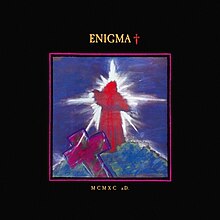
Enigma: MCMXC A.D.

Released in December 1990, the musical project Enigma's debut album quickly soared to the top of the charts to become the most successful album in the Virgin record label's catalogue at the time. The album has since received more than 60 platinum awards worldwide and by 1994 had already sold 14 million units.

Enigma: MCMXC A.D.

McMxc A.D. - Enigma

The album begins with 'Hello And Welcome' which features the iconic Enigma horn and the spoken voice bidding the listener a good evening, ushering the listener into a "world of music, spirit and meditation." Instantly noticeable is the New Age approach to music and through the spoken vocal part, a parallel spiritualistic motif.

The next track of the album consists of a medley of 'Sadeness,' 'Principals of Lust,' and a reprisal of 'Sadeness' each crossfaded together to create a continuous work. Throughout, dance beats are married with New Age style musical writing and overt sexual overtones from the vocal line. 'Sadeness' was to become the first single release from the album.

A later track, 'Mea Culpa' is written in a similar style to 'Sadeness,' using gregorian chant alongside dance beats and Shakuhatchi (often thought to be a pan pipe) writing, the style which Enigma used extensively throughout the 90's. The track uses lyrics written in french an latin and, in its single release, was titled 'Mea Cupa (Part 2),' referencing 'Sadeness' as part 1.

For its time and even now, this work was groundbreaking and established Enigma as a unique act with a highly unusual writing style which ultimately led to great commercial success.

For a review of Enigma's later greatest hits album, 'Love Sensuality Devotion,' click here.
McMxc A.D. - Enigma
Save on Delicious

Pendulum: Immersion

Aussie band Pendulum have celebrated great success from their first two albums. Their third album, the 2010 release 'Immersion' sees further refinement to their style. Unsurprisingly, the album went to the #1 spot on the UK charts in its first week of release

Pendulum: Immersion
Immersion (Deluxe Version) - Pendulum

The album begins with the feaux-orchestral work 'Genesis' which quickly becomes embellished with modulated synth tones. This moves swiftly into the next track, 'Salt In the Wounds,' an instrumental track which builds a sense of pace in preparation for the first track in the album to feature vocals, 'Watercolour.' This track, also released as the first single of the album, combines a singer songwriter style of writing with Pendulum's predominant drum and bass writing. Structurally, the piece employs largely a verse/chorus interaction but the use of a pre-verse section approximately 3:30 in to the track gives light relief from the frantic beats which underpin the track.

The album contains several noteworthy tracks but 'The Island, Pt. I (Dawn)' and 'The Island, Pt. 2 (Dusk)' are arguably the most recognisable tracks from the album. Part 1 presents a somewhat mysterious atmosphere, while part 2 is almost exclusively synth-led in a much harsher dub style.

Of the remaining tracks, 'Witchcraft' too deserves a mention. Again, Pendulum exhibit more a  more traditional songwriting within the context of aggressive Drum and Bass/House music. Overall, this album presents a selection of good material and shows the gradual stylistic development the band is undertaking.
Immersion (Deluxe Version) - Pendulum
Save on Delicious

Tuesday, 28 June 2011

Justice: Cross

The French duo Justice have spent several years establishing themselves as one of the biggest names in the electro house circuit, known for their heavy indie/rock influence. The 2007 release 'Cross' interestingly is the duo's first album release, however in spite of limited material, they are one of the most commercially successful bands on their label.


Justice: Cross

Cross - Justice

The album begins with 'Genesis,' which, from the very start, clearly establishes the grimey style which the duo is known for. One of the duo's greatest commercial successes, 'D.A.N.C.E,' for which they received a number of award nominations comes early in the album, leading in to the alternative electro house 'Newjack' track.  This track combines pastiched vocals with harsh electronic overtones in a similar manner to their 'Phantom' single.

'Phantom' and 'Phantom Part II' thankfully make a notable appearance in the middle of the album. This two part work employs a cunning change of style comparable to Pendulum's 'The Island'/'The Island Part II.' Sadly however, the second part appears quite tame in comparison to some of the duo's other efforts. One of the album's strengths, however, is the manner in which the pace and excitement raises and falls by design rather than coincidence.

'DVNO' revisits the duo's more commercial stylings and builds to the albums finale, 'One Minute To Midnight,' which ends the album on a high. Any fans of Electro House should certainly give this album a listen.
Cross - Justice
Save on Delicious

Tangerine Dream: The Endless Season

'The Endless Season' marks the close of Tangerine Dream's Five Atomic Seasons series with 11 track, a total of over an hour in duration, of some of the finest material from the series.


Tangerine Dream: The Endless Season

Tangerine Dream

The album begins with the shortest introductory track, 'Flashback,' which samples the marvellous 'Trauma' from part four in the Five Atomic Seasons series, 'Autumn In Hiroshima.' This leads into the more mysterious and darker 'Devotion' which makes extensive use of metallic and distorted guitar lines with innocent and naive flute writing towards the end of the track, segueing into 'Virtue Of Hope.'

In this reviewer's opinion, the fourth track, 'Escape,' is some of the finest material in the album. In typical contemporary Tangerine Dream output, the track fuses electronic drums with typical use of sequenced backdrops. The track also exhibits the group's typical use of extended form and very smooth harmony.

A later track, 'Logic Of Intuition,' characterises the theme of uncertainty and anxiety which is seen throughout the album. This track begins pleasantly before becoming increasingly frantic as it reaches the next track.

For fans of the band's early 00's output, 'Wild Oceans Of Blue Fate' ticks all the right boxes but illustrates the band's ever increasing attention to finding new and interesting timbres. Overall however, this album will prove a good listen for fans of any Tangerine Dream material from their independent years.
Tangerine Dream
Save on Delicious