Showing posts with label Synth. Show all posts

Friday, 5 August 2011

The Pet Shop Boys: 'The Clock 10/11/12'

The Pet Shop Boys are well known as early proponents of the 80’s synthpop movement who throughout their career have released a number of charting records largely in their inimitable disco influenced synthpop style. ‘The Most Incredible Thing’ is arguably the duo’s most unusual project - a musical soundtrack choreographed to a ballet. As such, the release combines more contemporary Pet Shop Boys writing with orchestral elements previously alluded to in passing reference from their popular music throughout the years.

The Pet Shop Boys: The Most Incredible Thing

The Most Incredible Thing - Pet Shop Boys


Of the tracks on the album, ‘The Clock 10/11/12’ proves to be one of the most interesting and so is focussed upon here. This particular track aptly combines the contemporary dance-influenced electronic writing with the pompous orchestral writing which are both seen throughout this album, beginning with purely electronic elements and after approximately three minutes segueing into a large ‘oom-pah’ score. Without viewing the ballet choreography, one cannot comment on the interplay between the music and dance at this point, however it is not unreasonable to suggest that this point depicts a more rural setting. At any rate, the music suggests very clear imagery and is commendable as such.

The track opens with sustained harmonies from some of the several synth lines which feature in this track, accompanied by several samples manufactured for their electronic connotations. At this point, the samples is question, given their prominence, could benefit from more advanced sonic processing akin to Tangerine Dream’s notable proficiency in this area. While considerations of timbre take place, the drum sequencing and timbre proves a noteworthy mention, being unlike most of the duo’s previous output.


Following the introduction comes the addition of additional musical elements, including a sequenced bassline and an accompanied off-beat synthesiser line which features very accomplished rhythmic interplay. The arrangement also is a testament to the expertise garnered by Tennant and Lowe throughout their career, bringing great variety to the arrangement through the variation of instrumentation which takes place.

Of the 21 tracks available on ‘The Most Incredible Thing,’ this certainly proves well worth a listen.
Save on Delicious

Monday, 18 July 2011

Tangerine Dream: Tangram

Released in 1980, 'Tangram' came at a pivotal point in the German band Tangerine Dream's career, meeting at the crossroads of their previous extended form sequencer-based compositions and their decidedly New Age material which was yet to come. It also came as the band introduced a new member Johannes Schmoelling to the group, but despite turbulent circumstances for the band, 'Tangram' went on to become the fifth best selling release from the band, unsurprising when one listens to the album.


Tangerine Dream: Tangram

The album itself consists of simply two tracks: 'Tangram Set 1' and 'Tangram Set 2,' overall lasting an approximate duration of 40 minutes. In the later release, 'Tangram 2008,' these two tracks are divided into seven in total and many of the timbres have been altered.

Track one begins with a moderate paced sequence which underpins the initial section, embellished with an emphatic descending bass partern, later developing harmonically and progressing to include the defining antiphonal analogue brass melody which defines that part of the set. What is notable about the first set is the apparent influence which progressive rock has given, leading to a slightly experimental application of metre and form. This influence from progressive rock contrasts heavily with the final section of the set, which sees a much more subtle and calming quality.

The second track of the album begins with synthesised strings which undergo various suspensions, drawing some similarity in writing to some of Jean Michel Jarre's output in the late 1970's. As the piece develops, sequencers provide a more upbeat underpinning to the music and a strong melody is soon added. A bridge between the two distinct tracks in set 2 revisits the band's much earlier Krautrock begins in its experimental use of noise and non-musical sound. This also occurs later while the synthetic drones which end the set fade in and gradually take the primary focus.

A later compilation, 'Booster,' features a rather fine excerpt from Tangram and is reviewed here.
Save on Delicious

Sunday, 10 July 2011

Wendy Carlos: The Well-Tempered Synthesizer

Walter Carlos, now 'Wendy' following her gender reassignment in the 70's, found fame for the release of 'Switched On Bach,' a collection of virtuosic synthesiser performances of Bach compositions, reviewed in detail here. The great commercial success achieved with her debut secured several further releases, including this 1969 follow up to her debut, 'The Well Tempered Synthesizer.'


Wendy Carlos: The Well-Tempered Synthesizer

Wendy Carlos

The 1999 remastered album, which is reviewed here, contains 12 musical tracks as well as an interesting vocal commentary and stereo alignment tones to calibrate systems in the by-gone era where reliable stereo sound had not permeated into the majority of living rooms. Unlike Carlos' previous album, 'The Well Tempered Synthesizer' contains tracks by Monteverdi, Domenico Scarlatti, and Handel as well as Bach. 

The performances contained within this album of Handel's Water Music and Bach's Brandenburg Concerto once more show Carlos' virtuosic ability at her craft. The 'Allegro Deciso' movement from Handel's water music is a truly vibrant and playful take on the work. Following the three movements from Handel come Scarlatti's Harpsichord Sonatas in E and D. The sonata in E once more exhibits the admirable range of timbres Carlos achieves with her Moog Modular system.

The Brandenburg Concerto performances are again of great quality, in particular the dysphoric introduction of the 'Andante' movement. The third movement, 'Presto,' revisits the playful and light-hearted nature of several tracks previous. Like the entire album, the music is crystal clear and makes highly creative use of the stereo field, two aspects of Carlos' music which have remained with her from the very start of her career.

Like the previous 'Switched On Bach' album, this release serves as a fantastic decadent exhibition of an electronic take on classical music, highly praise-worthy for both its originality and quality of performance.
Wendy Carlos
Save on Delicious

Saturday, 9 July 2011

Lightphaser: Eternity

Following another community submission from the readers of The Sonic Music Review, we are delighted to feature a 2011 EP by Lightphaser entitled 'Eternity,' a highly professional EP of Industrial Electronica. According to the artist's bio, available from the Lightphaser website here, the Lightphaser project first started in 1998, heavily influenced by EBM music, 'Electronic Body Music,' a term to describe a form of Industrial Dance music, first coined by Ralf Hutter of Kraftwerk. Following a hiatus of several years, the project became active once more in 2008, subsequently self-releasing further material, most recently 'Eternity.'

Lightphaser: Eternity

The EP consists of seven tracks, mostly remixes of tracks from an earlier album, 'Flashback.' The EP begins with 'Control (Dominance Remix),' a clear exposition of the dark Industrial style used throughout with an influence from trance music also apparent. The following track, 'Eternity (Nanowave)' continues in this vein, underpinned by a relentless and mysterious arpeggiated synthesiser part, a highlight of the material on offer. For Industrial music, it is curious the way in which this particular track can function also as ambient music may, allowing some comparison to be made to The Orb, which incorporate several contrasting musical styles into their own ambient output.

'Out Of Time (Running Late Remix),' underpinned by various ostinatos which produce a great sense of urgency, features several interesting musical elements. For one, the contrast in tonality between major and minor elements which occurs throughout gives a disorientating quality to the music, complimenting the style in which it is written.

The EP draws to a close with 'Deadlock' which revisits the hint of ambient writing seen earlier in a much more overt manner, intact also employing the arpeggiated synthesiser idea seen earlier. Following an excerpt of uptempo writing, 'Deadlock' begins and concludes with examples of drone based composition.

Overall, the material on offer in 'Eternity' is of excellent quality, displaying great talent from this independent Industrial artist, a fitting example which many in the field could aspire to. For more information and to download the EP, visit the Lightphaser website here.
Save on Delicious

Friday, 8 July 2011

Kraftwerk: Radio-Activity

Following the breakthrough success of 'Autobahn' in 1974, reviewed here, the next Kraftwerk album, 'Radio-Activity' was released in October 1975. Despite being released so soon after the band's first major record, this album shows a significant progression in style and is to be commended thus. This progression between albums is particularly significant in the case of Kraftwerk, which noticeably progress stylistically with every release.


Kraftwerk: Radio-Activity

Radio-Activity (Remastered) - Kraftwerk


The album begins with a short introductory track, 'Geiger Counter' before the title track 'Radio-Activity' marks the first musical material of the album. This title track was the only track from the album to be subsequently released from the album and has since been incorporated in the band's contemporary live performances, also appearing in their 'Minimum-Maximum' live album, reviewed here. This is followed up with the highly bleak 'Radioland.'

Kraftwerk are noted as a major influence by many of the big names of the 80's synthpop movement, including Orchestral Manoeuvres In The Dark (OMD). When listening to a later track from the album, 'Antenna,' the clear parallels to synthpop music which was soon to become mainstream are clear. To a lesser extent, the band's use of the vocoder within their musical setting in tracks such as 'The Voice Of Energy' and 'Radio Stars' could be seen as popularising the musical effect into mainstream music, again this was used extensively later by a number of acts.

While the allusions to synthpop are clear throughout the album, the penultimate track 'Transistor' illustrates a musical style akin to the musical style of Vangelis. While this album lacks the same degree of an impact which the band's previous album 'Autobahn' did, the album remains a critical historic release which was highly influential on the subsequent development of western popular music. The album was of critical importance to the development of Kraftwerk's own music, bridging the gap between the experimental days of Krautrock and their later sequence based offerings such as the later 'Computer World' album which greatly influenced the development of techno music.
Radio-Activity (Remastered) - Kraftwerk
Save on Delicious

Thursday, 30 June 2011

Jean Michel Jarre: Oxygene 7-13

Jean Michel Jarre first found fame during the mid-late 70's for his use  of instrumental electronica composition which received widespread acclaim. 'Oxygene 7-13,' released in 1997, is a sequel to his 1976 breakthrough album, 'Oxygene,' dedicated to his former mentor Pierre Schaeffer, the father of Musique Concrete.


Jean Michel Jarre: Oxygene 7-13

Jean Michel Jarre

This album was recorded using a number of classic synthesisers Jarre used for his previous 'Oxygene' and makes us of the Korg Minipops drum machine which provided many of the uncommon synthetic drum patterns in both albums. Stylistically however, this album is much less experimental than its prequel, with many of the tracks notably influenced by trance music with a much clearer structure.

This album comes at an uncertain point in Jarre's career in which several releases were made in various styles without a clear development of style, rather large changes. The album however does pitch itself right for the time as it combines many of the elements of popular electronic music at the time with some of Jarre's previous composition style. 

The album contains very good material and this reviewer finds it more consistent than its prequel in this regard. Many of the tracks are quite upbeat, part 12 also makes extensive use of sequenced elements which fans may enjoy. This album serves as a good introduction into Jarre's work and this style of music as a whole.

For a review of 'Oxygene,' click here.
Jean Michel Jarre
Save on Delicious

Sunday, 26 June 2011

Depeche Mode: Tour Of The Universe

'Tour Of The Universe' is a live album/DVD release recorded during synth pop group Depeche Mode's most recent tour in 2009. While the tour was largely supporting the group's 12th studio release, 'Sounds Of The Universe,' the set list contains material which goes back as far as the group's 1986 'Black Celebration' album.


Among the credits to the album is its chart performance, in fact going platinum in Germany and becoming the first live album to top the German music charts in a period of two years. The album also exhibits the group's praiseworthy musicianship, a notable virtue given the band's 31 years in the industry.

The album begins with 'In Chains,' 'Wrong' and 'Hole To Feed,' all from the group's 'Sounds Of The Universe' album, before revisiting tracks from their wide and varied musical past. Among the highlights of the album are 'Enjoy The Silence' and 'Personal Jesus,' in addition to several of the band's classic played toward the finale of the set. The band's energy sustains a listener's interest through the 2 hour long album and indeed the new arrangements to their older material allow Depeche Mode to showcase their formidable talent.

The album is clearly crafted with great precision to sustain their audience's attention, seen particularly in the juxtopposition between the energy of 'Personal Jesus' and sobering finale of 'Waiting For The Night.' While the audio CDs' are mixed with loving care, the DVD performance certainly adds even more to this fantastic live album.

For the review of the band's 1990 release 'Violator,' from which several tracks in the set list are taken, including 'Personal Jesus' and 'Waiting For The Night,' click here.
Save on Delicious

Saturday, 25 June 2011

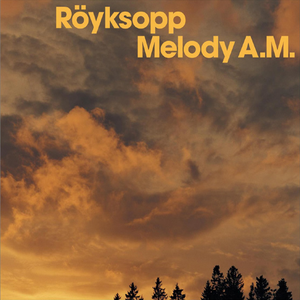
Royksopp: Melody A.M.

Royksopp are an Electronica duo which hail from Tromsø, Norway. The album here featured, 'Melody A.M.,' released in 2001, is the duo's critically acclaimed debut. Containing 14 tracks and a healthy 1:08 runtime [the US special edition is reviewed here], the album produces some memorable material, so much so that 'Eple' (meaning 'Apple') was even licensed by Apple Corp for the welcome music to OSX Panther.


One of the most interesting aspects of the album is the composer's ability to combine downbeat electronica which saw a great rise in popularity during the early 00's, with etherial electronic soundscapes. The textural complexity seen throughout the album also illustrates a high degree of compositional awareness from the duo not commonly seen so early in an acts' career.

The album from the very first track, 'So Easy,' exhibits an affinity with beat based electronica but the sombre string pad atmospheres seen in later material such as 'In Space' adds a further dimension to the album stylistically. In terms of the album's instrumentation and construction, there is a clear influence from the French duo Air (see the 'Love 2' review here) but further developing their sound with a catchier edge which has been met with popularity in the cases of 'Remind Me' and 'So Easy' to name just two examples.

Having extolled the virtues of the bands stylistic prowess, the final track, '40 Years Back/Come' presents a disjointed retrospect in two parts, ultimately concluding the album with a mysterious soundscape more common in Ambient music.
Save on Delicious

Friday, 24 June 2011

Kraftwerk: Minimum-Maximum

Having previously reviewed the first major Kraftwerk release, 'Autobahn,' Here, this review will feature their last commercial release, the 2005 live album 'Minimum-Maximum.'


Having only released a total of 7 albums from their success with 'Autobahn' and a compilation album, 'The Mix,' this live album adds no new material other than 'Planet Der Visionen' ('Planet of Visions') which is essentially a remix of their 'Expo 2000' single.

In terms of style, The album matches the heavily sequenced digital synth-driven sound seen in 'The Mix'. While the album is thin on new material, the new arrangements of Kraftwerk classics which total a shade over 2 hours of music in all do illustrate the versatility of the group and mastery of their kraft. Having said that, for those without an affinity to the highly polished electronic stylings which the band specialise in, a slight lack of variety and lengthy arrangements in the album may create mixed reactions.

The extracts from the group's 'Trans Europ Express' and 'Computer World' albums incorporated into the set really shine, being very well suited to the bands current performance style of 4 laptops on stage. While some tracks verge on monotony and the album as a whole lacks great variety, their reinvention of classic tracks bring their music to an increasingly modern audience and go to show that they've still got it.
Save on Delicious

Tangerine Dream: Booster

Tangerine Dream first became a household name after the increasing attention received since their first experimental music releases in the late 70s. As an early proponent of Krautrock along with Kraftwerk and similar bands, Tangerine Dream first began by creating avant-garde pieces making use of early analog synthesisers. As their career advanced and Tangerine Dream refined their sound, they became highly influential in the development of the 'New Age' musical genre and inspired several other acts, such as Enigma.

The 'Booster' compilation contains a total of 16 tracks across 2 CDs and serves as a tasteful retrospective for the bands output, including excerpts from 'Logos' and 'Tangram.' Alongside examples of Tangerine Dreams past hits, the album includes several lesser known tracks and some more recent compositions. The album itself includes several tracks recorded live, alongside several studio compositions, the sonic quality however is truly remarkable, this album is indeed very well mixed to sound crisp with great attention to detail.

The first track, 'One Night In Space' is a masterpiece in its own right and establishes the sequencer driven electronica style which is seen throughout the entire album. It is unsurprising that this has been incorporated into many of their live sets of late. With that said, most of the album is more ambient than the first track, serving as great background music. The hypnotic quality of 'The Greek Mirror' for instance reminds the listener of the bands roots in new age music but in a much more sophisticated electronica soundworld.

Overall, this album remains one of my personal favourites of all time, containing some truly exceptional examples of electronica which remains unparalleled by any other band. A later expansion to the 'Booster' Series, 'Booster Volume II' is reviewed here.
Save on Delicious

Thursday, 23 June 2011

Jean Michel Jarre: Oxygene

French composer Jean Michel Jarre, son of the famous film composer Maurice Jarre, celebrated breakthrough success in December 1976 with the release of his seminal first major album, 'Oxygene,' which has sold an estimated total of 12 million copies. This album became highly influential due to the combination of Jarre's grandiose french film music writing style with a strong electronica influence, realised with purely analog sysnthesisers. Jarre has released a total of 18 studio albums and sold an estimated 80 million units to date.


Jean Michel Jarre: Oxygene

The album contains a total of seven tracks labelled as 'Part I,' 'Part II,' Part III' and so forth. The most recognisable tracks, parts II and IV demonstrate early Trance music techniques through the form and instrumentation chosen, also creating the two most memorable melodies from the album.

While the later tracks don't quite hit the mark in the same way those mentioned above do, as a whole this album takes the listener on a remarkable musical journey that few albums since have rivalled. Jean Michel himself attempted this with the subsequent release of 'Oxygene 7-13,' which is reviewed here, however the slight naive charm of 'Oxygene' remains largely unmatched.

For the review to Jarre's 1978 follow up, 'Equinoxe,' click here.
Save on Delicious