Showing posts with label Jean Michel Jarre. Show all posts

Sunday, 14 August 2011

Jean Michel Jarre/The City of Prague Philharmonic Orchestra: The Symphonic Jean Michel Jarre

Jean Michel Jarre is well known as an early proponent of 'pop' electronica and has featured several times on The Sonic Music Review, which has featured his debut 'Oxygene', the followup 'Equinoxe', the 90's sequel to Oxygene 'Oxygene 7-13' and the ambient influenced 'Geometry Of Love' albums. This release is a rather interesting curio which sets to orchestral music, brilliantly performed by the City Of Prague Philharmonic Orchestra, various works by the French artist which by association makes a comparison with Jarre's father Maurice Jarre, a film composer of many exclusive credits to his name, audible.

Jean Michel Jarre/The City of Prague Philharmonic Orchestra: The Symphonic Jean Michel Jarre
The Symphonic Jean Michel Jarre - City of Prague Philharmonic Orchestra, City of Prague Philharmonic / James Fitzpatrick & The Crouch End Festival Chorus

This release opens with the first three parts of Jean Michel Jarre's 1993 release 'Chronologie' and later introduces acoustic reinterpretations of tracks from a total of nine major releases from Jarre's back catalogue. Interestingly, the album even includes a rendition 'Gloria, Lonely Boy' from the 2000 dance-influenced album 'Metamorphoses.' Where deemed necessary, the orchestrators have included some sparse electronic textures, such as a sequenced synthesiser pattern near the end of 'Chronologie Part 1.'

Having listened to all the material on offer, it becomes obvious how well the work of Jean Michel Jarre lends itself to an orchestral performance. 'Equinoxe Part 4' and many other upbeat tracks work particularly well in this setting, breathing new life into the music which this reviewer has loved for many years. The three excerpts from 'Industrial Revolution' unsurprisingly work well in this context, if not better by virtue of having authentic human performers (the excerpts in question make extensive use of imitative orchestral synthesis on the original release). The orchestra throughout the album illustrate an incredible variety of tone and timbre which add complexity in some cases beyond previous renderings of Jarre's work.


Considering the track listing, which contains over twenty items running a total of over an hour-and-a-half, 'Oxygene Part 2' and 'Equinoxe Part 5' are conspicuous by their absence, given the great scope for an orchestral performance within those particular tracks. While considering the shortcomings, which by no means detract from the album greatly, the rendition of 'Oxygene Part 4' proves unconvincing, largely because the material is not as well suited to an orchestral performance as some, however being Jarre's first hit track, its absence would be inappropriate for many fans.

All things considered, this release is a highly interesting take on the varied and accomplished work by Jean Michel Jarre which thrives in this setting, performed brilliantly by the City Of Prague Philharmonic Orchestra.  
Save on Delicious

Friday, 5 August 2011

The Sonic Music Review Playlist: Week 1

This week The Sonic Music Review is proud to introduce the compilation of weekly playlists which feature notable tracks from the week's reviews, in particular those that have earned special mention. Playlists are provided as iTunes and Spotify links, so be sure to install Spotify if available in your region.

This first playlist features selected works from Enigma, Jean Michel Jarre, Kraftwerk and Tangerine Dream.


Tracklisting:

1. Jean Michel Jarre - Oxygene Part II from Oxygene
2. Tangerine Dream - Trauma as appears on Booster Volume II
3. Jean Michel Jarre - Velvet Road from Geometry Of Love
4. Enigma                - Principals Of Lust from MCMXC A.D., as appears on Love Sensuality Devotion
5. Enigma                - Sadeness (Part 1) from MCMXC A.D., as appears on Love Sensuality Devotion
6. Jean Michel Jarre - Electric Flesh from Geometry Of Love
7. Kraftwerk            - Planet Of Visions from Minimum-Maximum
8. Tangerine Dream - Love On A Real Train as appears on Ministry Of Sound 'Anthems - Electronic 80's 2'

For the Spotify streamable playlist, click here.
Save on Delicious

Thursday, 7 July 2011

Jean Michel Jarre: Hong Kong

The French electronic musician Jean Michel Jarre, who rose to fame in the 1970's following his releases of Oxygene, reviewed here, and Equinoxe, reviewed here, among his performance credits owns the title of the first western musician to be allowed to perform in the People's Republic of China. Later in his career, during March 1994, Jarre performed in Hong Kong, subsequently releasing a live album documenting the performance.

Jean Michel Jarre: Hong Kong

Hong Kong - Jean Michel Jarre


The 1994 tour celebrated the recent release of Jarre's 'Chronologie' album. Unsurprisingly therefore, five of the eighteen tracks on the album are from the 'Chronologie' release, with 'Chronologie Part 2' being the first musical track on the album after 'Countdown' which records the audience and a countdown to the show's opening. The album is commendable for its warm sound and highly exciting feel musically, quickly seen from the start.

Later in the album comes 'Souvenir De Chine' and 'Oxygene 4,' which are both to be expected among a typical performance from the artist. One of the interesting curios of the album is 'Digisequencer' which is not found on any studio album by Jarre. The performance of 'Les Chantes Magnetiques Part 2' which features on this album is also of merit, showing Jarre's exuberance quite audibly.

Unfortunately, this album has neglected to receive critical acclaim, a great shame considering that this is one of Jarre's finest live albums that captures very well the excitement of a live electronica performance from the comfort of your living room.  
Hong Kong - Jean Michel Jarre
Save on Delicious

Sunday, 3 July 2011

Jean Michel Jarre: Geometry Of Love

During the early 00's, inside a market much more diverse than when Jean Michel Jarre first began composing in the 70's, Jarre released several works which deviate from his pre-established style seen in earlier releases. 'Geometry Of Love' follows the lounge jazz 'Sessions 2000' and dance 'Metamorphoses' releases, this time creating an Lounge Ambient influenced album.


Jean Michel Jarre: Geometry Of Love

Geometry Of Love - Jean Michel Jarre

Important for this release is the manner in which it was conceived. Rather than Jarre's early releases which were made from hardware synthesisers, this album was created primarily via the means of digital software sequencing. This creates a drastically different soundworld compared to all of the artist's previous output, creating a more 'open' sonic environment which employs timbres more congruent to Ambient music.

The album begins with a fusion of sampled strings with more conventional synthetic writing in track one, 'Pleasure Principal.' To its credit, this is a rare example of ambient music to employ drum and percussive elements without a breakbeat influence, which can detract from a composition's ambient quality. In lieu of clear melodies, this track uses more subtle musical material to lead the piece.

The album contains a two-part title track, interestingly separated, with 'Geometry Of Love part 2' only coming at the end of the album. These tracks have become part of several live sets by Jarre, including his 2005 performance in the Forbidden City in China.

This album contains a wealth of good material which fans of ambient music would enjoy. When the album concludes with the second part, which is written in a similar style but developing the musical ideas seen in part one, the nostalgic effect created proves highly calming and pleasantly disorientating.
Geometry Of Love - Jean Michel Jarre
Save on Delicious

Thursday, 30 June 2011

Jean Michel Jarre: Oxygene 7-13

Jean Michel Jarre first found fame during the mid-late 70's for his use  of instrumental electronica composition which received widespread acclaim. 'Oxygene 7-13,' released in 1997, is a sequel to his 1976 breakthrough album, 'Oxygene,' dedicated to his former mentor Pierre Schaeffer, the father of Musique Concrete.


Jean Michel Jarre: Oxygene 7-13

Jean Michel Jarre

This album was recorded using a number of classic synthesisers Jarre used for his previous 'Oxygene' and makes us of the Korg Minipops drum machine which provided many of the uncommon synthetic drum patterns in both albums. Stylistically however, this album is much less experimental than its prequel, with many of the tracks notably influenced by trance music with a much clearer structure.

This album comes at an uncertain point in Jarre's career in which several releases were made in various styles without a clear development of style, rather large changes. The album however does pitch itself right for the time as it combines many of the elements of popular electronic music at the time with some of Jarre's previous composition style. 

The album contains very good material and this reviewer finds it more consistent than its prequel in this regard. Many of the tracks are quite upbeat, part 12 also makes extensive use of sequenced elements which fans may enjoy. This album serves as a good introduction into Jarre's work and this style of music as a whole.

For a review of 'Oxygene,' click here.
Jean Michel Jarre
Save on Delicious

Monday, 27 June 2011

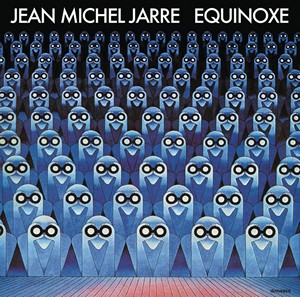
Jean Michel Jarre: Equinoxe

Following the breakthrough success of this French composer's previous album, 'Oxygene,' which is reviewed here, Jarre's 1978 followup continues stylistically where his last album left off. While the ripples sent through the musical world with his previous release are not echoed in this album, which comes at a time in which the synthesiser was becoming increasingly mainstream, Jarre's second major album presents an even more impressive portfolio than the composer's previous album.


The album itself contains a total of eight tracks which are, like 'Oxygene,' labelled as 'Part 1,' 'Part 2' and so forth but other than this and Jarre's style of writing, that is where the comparisons end. For one, 'Equinoxe' presents a wider sonic palette from Jarre and the album presents a more immediate progression between tracks, constructing a much clearer musical journey than the album's predecessor.

Among the highlights are parts 2 and 3, which constitute the majority of the albums A Side. In these tracks, there is a notable development from Jarre in his use of sequencing, with the bassline in part 3 being particularly interesting. Part 4 also introduces one of the most memorable musical material from the album and was released as the second single from this album.

The first single to be released was part 5 which, while it presents a highly exciting track, remains relegated by some as puerile for its composition style. The album concludes with a melancholy track, part 8, which exhibits typical writing for street organs which Jarre incorporates which playing live.

Overall, this album presents a significant development for Jarre and remains some of his finest work.
Save on Delicious

Thursday, 23 June 2011

Jean Michel Jarre: Oxygene

French composer Jean Michel Jarre, son of the famous film composer Maurice Jarre, celebrated breakthrough success in December 1976 with the release of his seminal first major album, 'Oxygene,' which has sold an estimated total of 12 million copies. This album became highly influential due to the combination of Jarre's grandiose french film music writing style with a strong electronica influence, realised with purely analog sysnthesisers. Jarre has released a total of 18 studio albums and sold an estimated 80 million units to date.


Jean Michel Jarre: Oxygene

The album contains a total of seven tracks labelled as 'Part I,' 'Part II,' Part III' and so forth. The most recognisable tracks, parts II and IV demonstrate early Trance music techniques through the form and instrumentation chosen, also creating the two most memorable melodies from the album.

While the later tracks don't quite hit the mark in the same way those mentioned above do, as a whole this album takes the listener on a remarkable musical journey that few albums since have rivalled. Jean Michel himself attempted this with the subsequent release of 'Oxygene 7-13,' which is reviewed here, however the slight naive charm of 'Oxygene' remains largely unmatched.

For the review to Jarre's 1978 follow up, 'Equinoxe,' click here.
Save on Delicious