Thursday, 30 June 2011

Ellie Goulding: Lights

Amoung the credits to the English singer/songwriter Ellie Goulding are performing at the 2011 royal wedding of Prince William and Kate Middleton, placing her in a rarefied position of success considering at the time of writing, Ellie Goulding has only released one studio album. 'Lights' is the singer's 2010 debut album, following her 2009 introductory EP.

Ellie Goulding: Lights

Bright Lights (Deluxe Edition) - Ellie Goulding

This album is noteworthy for it's approach, which combines uncommon electronic processing with synth based singer/songwriter writing. Throughout, the artist's smooth voice leads synthesisers alongside often either piano or guitar leading to an almost electro-folk sound.

This album is in no way short of good material and includes a performance of Elton John's 'Your Song,' for which the artist received a great amount of airplay. The UK deluxe edition from iTunes, which is reviewed here, includes live tracks and videos alongside the core track listing. Among the highlights of the album are 'This Love (Will Be Your Downfall)' and 'The Writer,' the latter of which shows the proficiency of the songwriter with very well constructed and transparent change of metre between 3/4 and 4/4 throughout.

In amongst the latter tracks are the title track 'Lights,' which achieved great success as a single from the album and the hypnotic 'Animal.' Considering the quality of material on offer, this album represents great value from a music release.
Bright Lights (Deluxe Edition) - Ellie Goulding
Save on Delicious

Jean Michel Jarre: Oxygene 7-13

Jean Michel Jarre first found fame during the mid-late 70's for his use  of instrumental electronica composition which received widespread acclaim. 'Oxygene 7-13,' released in 1997, is a sequel to his 1976 breakthrough album, 'Oxygene,' dedicated to his former mentor Pierre Schaeffer, the father of Musique Concrete.


Jean Michel Jarre: Oxygene 7-13

Jean Michel Jarre

This album was recorded using a number of classic synthesisers Jarre used for his previous 'Oxygene' and makes us of the Korg Minipops drum machine which provided many of the uncommon synthetic drum patterns in both albums. Stylistically however, this album is much less experimental than its prequel, with many of the tracks notably influenced by trance music with a much clearer structure.

This album comes at an uncertain point in Jarre's career in which several releases were made in various styles without a clear development of style, rather large changes. The album however does pitch itself right for the time as it combines many of the elements of popular electronic music at the time with some of Jarre's previous composition style. 

The album contains very good material and this reviewer finds it more consistent than its prequel in this regard. Many of the tracks are quite upbeat, part 12 also makes extensive use of sequenced elements which fans may enjoy. This album serves as a good introduction into Jarre's work and this style of music as a whole.

For a review of 'Oxygene,' click here.
Jean Michel Jarre
Save on Delicious

Wednesday, 29 June 2011

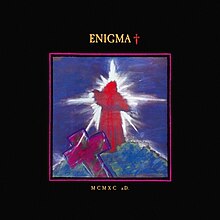
Enigma: MCMXC A.D.

Released in December 1990, the musical project Enigma's debut album quickly soared to the top of the charts to become the most successful album in the Virgin record label's catalogue at the time. The album has since received more than 60 platinum awards worldwide and by 1994 had already sold 14 million units.

Enigma: MCMXC A.D.

McMxc A.D. - Enigma

The album begins with 'Hello And Welcome' which features the iconic Enigma horn and the spoken voice bidding the listener a good evening, ushering the listener into a "world of music, spirit and meditation." Instantly noticeable is the New Age approach to music and through the spoken vocal part, a parallel spiritualistic motif.

The next track of the album consists of a medley of 'Sadeness,' 'Principals of Lust,' and a reprisal of 'Sadeness' each crossfaded together to create a continuous work. Throughout, dance beats are married with New Age style musical writing and overt sexual overtones from the vocal line. 'Sadeness' was to become the first single release from the album.

A later track, 'Mea Culpa' is written in a similar style to 'Sadeness,' using gregorian chant alongside dance beats and Shakuhatchi (often thought to be a pan pipe) writing, the style which Enigma used extensively throughout the 90's. The track uses lyrics written in french an latin and, in its single release, was titled 'Mea Cupa (Part 2),' referencing 'Sadeness' as part 1.

For its time and even now, this work was groundbreaking and established Enigma as a unique act with a highly unusual writing style which ultimately led to great commercial success.

For a review of Enigma's later greatest hits album, 'Love Sensuality Devotion,' click here.
McMxc A.D. - Enigma
Save on Delicious

Pendulum: Immersion

Aussie band Pendulum have celebrated great success from their first two albums. Their third album, the 2010 release 'Immersion' sees further refinement to their style. Unsurprisingly, the album went to the #1 spot on the UK charts in its first week of release

Pendulum: Immersion
Immersion (Deluxe Version) - Pendulum

The album begins with the feaux-orchestral work 'Genesis' which quickly becomes embellished with modulated synth tones. This moves swiftly into the next track, 'Salt In the Wounds,' an instrumental track which builds a sense of pace in preparation for the first track in the album to feature vocals, 'Watercolour.' This track, also released as the first single of the album, combines a singer songwriter style of writing with Pendulum's predominant drum and bass writing. Structurally, the piece employs largely a verse/chorus interaction but the use of a pre-verse section approximately 3:30 in to the track gives light relief from the frantic beats which underpin the track.

The album contains several noteworthy tracks but 'The Island, Pt. I (Dawn)' and 'The Island, Pt. 2 (Dusk)' are arguably the most recognisable tracks from the album. Part 1 presents a somewhat mysterious atmosphere, while part 2 is almost exclusively synth-led in a much harsher dub style.

Of the remaining tracks, 'Witchcraft' too deserves a mention. Again, Pendulum exhibit more a  more traditional songwriting within the context of aggressive Drum and Bass/House music. Overall, this album presents a selection of good material and shows the gradual stylistic development the band is undertaking.
Immersion (Deluxe Version) - Pendulum
Save on Delicious

Tuesday, 28 June 2011

Justice: Cross

The French duo Justice have spent several years establishing themselves as one of the biggest names in the electro house circuit, known for their heavy indie/rock influence. The 2007 release 'Cross' interestingly is the duo's first album release, however in spite of limited material, they are one of the most commercially successful bands on their label.


Justice: Cross

Cross - Justice

The album begins with 'Genesis,' which, from the very start, clearly establishes the grimey style which the duo is known for. One of the duo's greatest commercial successes, 'D.A.N.C.E,' for which they received a number of award nominations comes early in the album, leading in to the alternative electro house 'Newjack' track.  This track combines pastiched vocals with harsh electronic overtones in a similar manner to their 'Phantom' single.

'Phantom' and 'Phantom Part II' thankfully make a notable appearance in the middle of the album. This two part work employs a cunning change of style comparable to Pendulum's 'The Island'/'The Island Part II.' Sadly however, the second part appears quite tame in comparison to some of the duo's other efforts. One of the album's strengths, however, is the manner in which the pace and excitement raises and falls by design rather than coincidence.

'DVNO' revisits the duo's more commercial stylings and builds to the albums finale, 'One Minute To Midnight,' which ends the album on a high. Any fans of Electro House should certainly give this album a listen.
Cross - Justice
Save on Delicious

Tangerine Dream: The Endless Season

'The Endless Season' marks the close of Tangerine Dream's Five Atomic Seasons series with 11 track, a total of over an hour in duration, of some of the finest material from the series.


Tangerine Dream: The Endless Season

Tangerine Dream

The album begins with the shortest introductory track, 'Flashback,' which samples the marvellous 'Trauma' from part four in the Five Atomic Seasons series, 'Autumn In Hiroshima.' This leads into the more mysterious and darker 'Devotion' which makes extensive use of metallic and distorted guitar lines with innocent and naive flute writing towards the end of the track, segueing into 'Virtue Of Hope.'

In this reviewer's opinion, the fourth track, 'Escape,' is some of the finest material in the album. In typical contemporary Tangerine Dream output, the track fuses electronic drums with typical use of sequenced backdrops. The track also exhibits the group's typical use of extended form and very smooth harmony.

A later track, 'Logic Of Intuition,' characterises the theme of uncertainty and anxiety which is seen throughout the album. This track begins pleasantly before becoming increasingly frantic as it reaches the next track.

For fans of the band's early 00's output, 'Wild Oceans Of Blue Fate' ticks all the right boxes but illustrates the band's ever increasing attention to finding new and interesting timbres. Overall however, this album will prove a good listen for fans of any Tangerine Dream material from their independent years.
Tangerine Dream
Save on Delicious

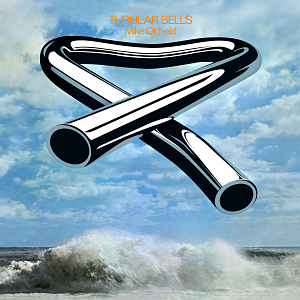
Mike Oldfield: Tubular Bells

'Tubular Bells' is the seminal progressive rock and arguably New Age debut record by Mike Oldfield, released in 1973 and famed for being the first release on the Virgin Records music label which ensured the company a solid commercial beginning. Among the personnel list are no fewer than 19 instruments credited to Oldfield himself, alongside a further 8 instrumentalists.

Mike Oldfield: Tubular Bells

Tubular Bells (Remastered) - Mike Oldfield

The album contains just 2 tracks, with the most recognisable theme from the album seen in the opening of track 1 which was used famously in 'The Exorcist.' The track shows great versatility from Oldfield as a performer and as an artist with the highly technical nature of the material. Typical of progressive rock music, the album contains a number of key and time changes which give a disjointed feel which is idiomatic of this genre.

The second track of the album is constructed in a similar manner to the first track, weaving thematic material and manipulating it with some skill. The thick instrumentation seen throughout has also been subject to careful design and gives the album its own unique character not paralleled with some other works of the period.

The album concludes with an excerpt of 'The Sailor's Hornpipe' which many will find familiar and serves as a fitting finale for this somewhat 'quirky' album. Unsurprisingly given the commercial success of the album, Mike Oldfield has had over 30 charting albums to appear on UK charts.
Tubular Bells (Remastered) - Mike Oldfield
Save on Delicious

The Orb: The Orb's Adventures Beyond The Ultraworld

The Orb, a musical act formed of Alex Paterson and various accomplices through the years, have become well known to many fans of Ambient House as one of the most influential and prolific acts within the genre. 'The Orb's Adventures Beyond The Ultraworld' is the act's widely acclaimed 1991 debut album which paved the way for the group's career which remains active today.


The Orb's Adventures Beyond the Ultraworld (Deluxe Edition) - The Orb

The album begins with the somewhat surreal 'Little Fluffy Clouds' which sets the tone for several of the tracks which follow. Interestingly, this track is a cover of a Terry Riley composition of many years previous. The second track on the album however shows more immediate stylistic links to ambient music with a noticeable breakbeat influence. The album continues, meandering through a variety of electronic genres which shows particular technical ability given the age of the album.

The concluding track, 'A Huge Ever Growing Pulsating Brain That Rules From The Centre Of The Ultraworld,' is one of the most significant Ambient House tracks of the 90's. This track is perhaps the most interesting track of the album, if the album is to be considered a collection of compositions rather than a singular whole. At 18 minutes long, this is the longest track of the album and sums up the psychedelic nature of the Orb's work.
The Orb's Adventures Beyond the Ultraworld (Deluxe Edition) - The Orb
Save on Delicious

Monday, 27 June 2011

John Metcalfe: A Darker Sunset

This little known work from 2008 by the obscure virtuoso violinist and electronic musician, John Metcalfe remains a rare curio in this reviewer's music collection but undoubtedly one of the highlights.


Throughout, the composer combines a writing style comparable to Air with more classical classical writing for acoustic instrumentation, displaying notable versatility from the composer. His talents as a violinist are also plain to see throughout but one of the stand-out tracks is undoubtedly 'The Shock Of Recognition.'

In addition to the composer's precise electronic writing, the extensive use of drum programming brings even greater credit to the album alongside the well refined use of synthesised melodic lines. Later in the album, the composer demonstrates an affinity to more ambient film music in tracks such as 'Higher, Lighter.' Overall this album presents a very appealing listen, well worth the time and certainly a purchase if a copy can be found.
Save on Delicious

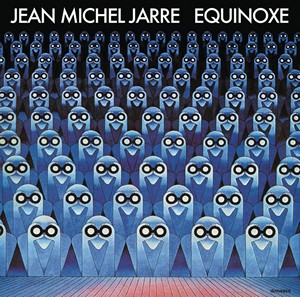
Jean Michel Jarre: Equinoxe

Following the breakthrough success of this French composer's previous album, 'Oxygene,' which is reviewed here, Jarre's 1978 followup continues stylistically where his last album left off. While the ripples sent through the musical world with his previous release are not echoed in this album, which comes at a time in which the synthesiser was becoming increasingly mainstream, Jarre's second major album presents an even more impressive portfolio than the composer's previous album.


The album itself contains a total of eight tracks which are, like 'Oxygene,' labelled as 'Part 1,' 'Part 2' and so forth but other than this and Jarre's style of writing, that is where the comparisons end. For one, 'Equinoxe' presents a wider sonic palette from Jarre and the album presents a more immediate progression between tracks, constructing a much clearer musical journey than the album's predecessor.

Among the highlights are parts 2 and 3, which constitute the majority of the albums A Side. In these tracks, there is a notable development from Jarre in his use of sequencing, with the bassline in part 3 being particularly interesting. Part 4 also introduces one of the most memorable musical material from the album and was released as the second single from this album.

The first single to be released was part 5 which, while it presents a highly exciting track, remains relegated by some as puerile for its composition style. The album concludes with a melancholy track, part 8, which exhibits typical writing for street organs which Jarre incorporates which playing live.

Overall, this album presents a significant development for Jarre and remains some of his finest work.
Save on Delicious

James Yuill: Turning Down Water For Air

'Turning Down Water For Air' is James Yuill's second album but first major release, initially released under his own label, the album was rereleased in 2009 following the composer's signing to the Moshi Moshi label. Consisting primarily of laptop-based sonic processing alongside guitar, cello and soft vocals, the album contains 12 tracks totalling 41 minutes.


The album sees a clear influence from New Order and similar synth pop groups, but Yuill's stylistic development to include more contemporary dance beats alongside influences from folk and electronica musics give this album a personality of its own. Among the albums highlights are 'No Pins Allowed' and 'No Surprise,' which were the first two singles to be released from the album.

With many of the tracks seemingly relating to Yuill's own personal experiences, much of the album is autobiographical with a continuous theme of longing and loss. This is seen in particular in the track 'Over The Hills,' the album's third single release.

This album comes fairly early on in the composer's career but shows James Yuill to be a particularly versatile and interesting artist with an inimitable style and great musical charisma.
Save on Delicious
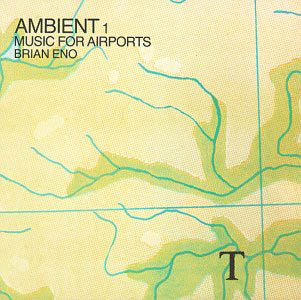
Brian Eno: Music For Airports

The landmark 1978 Eno album 'Music For Airports' is the first acknowledged ambient work, after Eno himself coined the term in the album's liner notes. Interestingly given this albums landmark status as an ambient work, this is actually Eno's 6th studio album after his 1974 debut.


The album is considered fairly experimental for its day, consisting of four tracks labelled '1/1,' '1/2,' '2/1' and '2/2' using only tape loops, a synthesiser and a piano to create the 48 minute total runtime. Brian Eno himself noted that this album was conceived to provide a musical backdrop which could be as interesting to the listener when both listening intently and when the music plays purely in the background.

'1/1' begins the album with a piano and synthesiser based piece. The composer noted that this piece was constructed from two tape loops of separate piano melodies which interact well together utilising the effect of phasing which is used throughout. Here, phrasing refers to the interaction between two tape loops of unequal length that will when played simultaneously go in and out of phase with one another.

'1/2' is constructed in a similar manner as the first track but uses phasing between tapes of sustained vocal notes. The phasing effect in this effect creates at points, lush harmonies, and at others, dissonances. This is possibly the most cited track of the album and also the most familiar to a contemporary ambient composer given today's primary use of electronic sound sources.

The vocal loops remain present in '2/2,' which adds a piano to the instrumentation, before the work's finale, '2/2.' This final track is perhaps the most experimental due to its use of harmony and reedy synthesiser instrumentation. Overall however, the variety and progression between tracks certainly enhance this album.
Save on Delicious
Sunday, 26 June 2011

John Murphy and Underworld: Sunshine (soundtrack)

Having previously reviewed the Daft Punk soundtrack to 'Tron: Legacy' here, it seems pertinent to review this heavily contrasting work, the soundtrack to the 2007 Danny Boyle film 'Sunshine.'


The soundtrack is a collaboration between film composer John Murphy and Underworld, the british electronic music duo. Throughout, the collaborators fuse a traditional film music style written predominantly for strings, with electronic effects and processing more congruent to laptop based electronic music production. This marriage is echoed in the film's style, the score shines at moments of tranquility and of terror and excels at both.

'Capa's Last Transmission Home' uses material also seen in a later track, 'To Heal.' This track, which is actually adapted from a previous Underworld release is one of the rare moments of tranquility if the film and the lush synthetic sound world is well suited alongside the various other musical elements. The following track, which is taken from a scene in which the captain of the vessel dies, is an equally effective piece primarily for strings which shows Murphey's talent as an orchestral composer. It is later in the album however, where the score makes it's climax.

The composers' use of disjointed and highly dysphoric writing are highly effective in portraying the fear and terror felt on screen to the audience. 'Kanada's Death Pt. 1' for instance is one of the most effective examples of music in the film through the suggestion of impending angony, the greatest strength is that it leaves the listener to fill in the emotional subtext rather than making an overt statement of terror. With that said, the furious string playing in 'Pinbacker Slashes Capa' could not be a clearer commentary to the on screen terror, and yet it functions so highly effectively as it both contrasts and builds upon the previous writing which suggested an unseen terror.

Later, as the protagonist prepares for the seeming impossible task of escaping from a sealed airlock in 'Capa Suits Up,' we see more typical Underworld writing which actually ends with the furious string playing seen previous. This leads in to 'Sunshine (Adagio in D Minor),' possibly Murphey's best writing as it captures so clearly the myriad of emotions from the movie in preparation for the film's finale.
Save on Delicious

Solipsism: Let's Watch The Sunrise

Since this blog's conception, it has been a personal aspiration to establish a service to the wider musical community. For this reason, it brings great pleasure to review Craig Murphy, aka. Solipsism's 'Let's Watch The Sunrise' mini-album, following a suggestion by the artist.


The album begins with a synthetic drone based title track, 'Let's Watch The Sunrise' which gradually evolves texturally with gentle overtones and gentle modulation effects. As seen in many New Age music, there is a noticeable Ambient influence and, to a degree, the La Monte Young school of Minimalist music composition.

The second track, 'No Destination In Mind' continues to evoke the calm mood expressed in its predecessor with thicker musical textures. This is also seen in the later track 'Horizon' which employs metallic rings and gently modulating undertones also seen later as the album reaches conclusion in 'MirrororriM.'

While some readers may be unfamiliar with the practices of New Age music, the calming atmospheres in this album make it a very appropriate introduction.

More information about Solipsism can be found at their website, http://www.solipsism.co.cc/.
Save on Delicious

Walter Carlos: Switched On Bach

The 1968 Walter (later 'Wendy') Carlos album 'Switched On Bach' album is the rather interesting Classical / Experimental music curio which introduced a great many to the Moog Synthesizer, paving the way for the slew of 70's acts to use the machine as their primary instrument. The album also marks its place in history as a breakthrough electronic album which will forever be one of the first classical music based albums to achieve platinum status.


The albums track listing contains, as the title suggests, a series of performances of Bach works, including a remarkable performance of the Brandenburg Symphony and three of Bach's Two-part Inventions. Most listeners unfamiliar with classical music will probably at least recognise Carlos' performance of Jesu, Joy Of Man's Desiring.

When one considers the album's advanced years, there is a truly remarkable attention paid to mixing the album - each of the tracks sound crisp with fantastic attention to articulations and dynamics, rather than a flat compressed amplitude, and Carlos' use of the stereo field puts the album far ahead of its time in this regard.

While the album has been very carefully mixed, all performances featured on the album have clearly been subject to great care, with impressive variety of timbre and expression. Every track contains a multitude of synthetic instrumentation and shows Carlos' expertise with their craft, not to mention the versatility of the Moog system. This album is without doubt one of the best exposition of the great variety possible with a synthesiser, given a skilled operator with the know-how and imagination to pull off such a feat as Walter Carlos.

Unsurprisingly, following the great success of 'Switched On Bach,' Carlos continued with a variety of projects including several follow up albums and soundtrack credits including 'Tron' and 'A Clockwork Orange.' For a review of the 1969 release 'The Well Tempered Synthesizer,' click here.
Save on Delicious

Depeche Mode: Tour Of The Universe

'Tour Of The Universe' is a live album/DVD release recorded during synth pop group Depeche Mode's most recent tour in 2009. While the tour was largely supporting the group's 12th studio release, 'Sounds Of The Universe,' the set list contains material which goes back as far as the group's 1986 'Black Celebration' album.


Among the credits to the album is its chart performance, in fact going platinum in Germany and becoming the first live album to top the German music charts in a period of two years. The album also exhibits the group's praiseworthy musicianship, a notable virtue given the band's 31 years in the industry.

The album begins with 'In Chains,' 'Wrong' and 'Hole To Feed,' all from the group's 'Sounds Of The Universe' album, before revisiting tracks from their wide and varied musical past. Among the highlights of the album are 'Enjoy The Silence' and 'Personal Jesus,' in addition to several of the band's classic played toward the finale of the set. The band's energy sustains a listener's interest through the 2 hour long album and indeed the new arrangements to their older material allow Depeche Mode to showcase their formidable talent.

The album is clearly crafted with great precision to sustain their audience's attention, seen particularly in the juxtopposition between the energy of 'Personal Jesus' and sobering finale of 'Waiting For The Night.' While the audio CDs' are mixed with loving care, the DVD performance certainly adds even more to this fantastic live album.

For the review of the band's 1990 release 'Violator,' from which several tracks in the set list are taken, including 'Personal Jesus' and 'Waiting For The Night,' click here.
Save on Delicious
Saturday, 25 June 2011

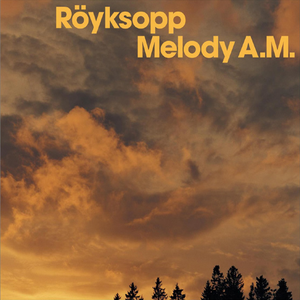
Royksopp: Melody A.M.

Royksopp are an Electronica duo which hail from Tromsø, Norway. The album here featured, 'Melody A.M.,' released in 2001, is the duo's critically acclaimed debut. Containing 14 tracks and a healthy 1:08 runtime [the US special edition is reviewed here], the album produces some memorable material, so much so that 'Eple' (meaning 'Apple') was even licensed by Apple Corp for the welcome music to OSX Panther.


One of the most interesting aspects of the album is the composer's ability to combine downbeat electronica which saw a great rise in popularity during the early 00's, with etherial electronic soundscapes. The textural complexity seen throughout the album also illustrates a high degree of compositional awareness from the duo not commonly seen so early in an acts' career.

The album from the very first track, 'So Easy,' exhibits an affinity with beat based electronica but the sombre string pad atmospheres seen in later material such as 'In Space' adds a further dimension to the album stylistically. In terms of the album's instrumentation and construction, there is a clear influence from the French duo Air (see the 'Love 2' review here) but further developing their sound with a catchier edge which has been met with popularity in the cases of 'Remind Me' and 'So Easy' to name just two examples.

Having extolled the virtues of the bands stylistic prowess, the final track, '40 Years Back/Come' presents a disjointed retrospect in two parts, ultimately concluding the album with a mysterious soundscape more common in Ambient music.
Save on Delicious

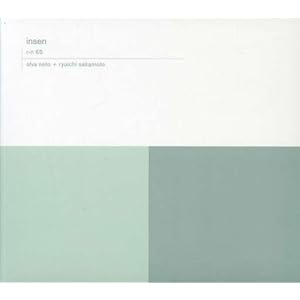
Alva Noto: Insen

Released in 2005 by Carsten Nicolai, better known as Alva Noto, in collaboration with pianist Ryuichi Sakamoto, Insen is the second album in an ongoing series by the duo. Alva Noto has to date released a total of 45 albums under various aliases since his 1996 debut 'spin.' This album however presents an intriguing marriage of ambient piano technique with Noto's distinctive Glitch Electronica composition.


Texturally, most of the album is quite minimal but with Noto's extensive treatment of piano to create grooves, sustains and even percussive rhythms, the album remains a highly credible work. Stylistically, the approach to composition features typical glitch technique but lacks the pace of much Noto material previously released and presents a series of 7 tracks, a total of 43 minutes, of intriguing pseudo-Ambient material.

In a way, for the attentive listener, the minimal instrumentation presents a slight tedium. For this reason, the 4th track, 'Moon,' deserves a special mention for its textural variety and construction of new additional timbres from Sakamoto's piano playing. Much of the album must be considered a complete work rather than a series of tracks, given the fantastic development throughout from its early minimal ambient beginnings to the more notable integration of glitch elements seen in 'Iano' and the highly processed sombre ending, 'Avaol.'

For a review of Noto's later 'Unitxt' album, click here.
Save on Delicious

Friday, 24 June 2011

Global Communication: '76:14'

While many readers may be unfamiliar with Global Communication, an ambient duo based in the UK, their debut album, simply entitled '76:14,' has received wide-spread critical acclaim. Frankly, for anyone with a Penchant for ambient music or downtempo soothing electronica, it's clear to see why this album received such praise.


The album begins with the brooding synthetic introduction portrayed by the first track, 4:02. This continues to build until a climactic conclusion at which point the haunting grand father clock crossfades in from the next track, '14:31.' The true strength of the album becomes clear from having listened to very little of the material on offer: Global Communication have an uncanny ability to give ambient music great interest for the attentive listener through their arrangements and choice of material.

The dysphoric introduction to the third track, '2:25' slowly evolves to incorporate a heavy beat which given the ambient beginnings to the album initially seems out of place, but it integrated well into the piece and contrasts well with the next track which seems to even draw inspiration weakly from Enigma and similar acts through it's use of a faux-New Age vibe which is also seen more overtly later in '5:23,' whose sequencer based synthetic rhythms and filtered white noise draw an instant comparison to 'Love on a Real Train' by Tangerine Dream.

This album is unashamedely a great ambient work, all the more due to the variety afforded the the expert use of material. The album takes the listener on a musical journey and serves as a brilliant musical backdrop to the daily grind. When one considers that this album was made in 1994, it's longevity and sustained relevance is a great credit to the English duo.
Save on Delicious

Enigma: 'Love Sensuality Devotion - The Greatest Hits'

The Enigma Musical Project is estimated to have sold in excess of 50 million albums and this 2001 greatest hits compilation release 'Love Sensuality Devotion' certainly contains some noteworthy material. The musical project themselves, led by Michel Cretu, is known for the New Age music influenced writing which combines dance and traditional chant elements, a highly original premise at the time of the act's debut.

Enigma: Love Sensuality Devotion
Love Sensuality Devotion - The Greatest Hits - Enigma


The album begins with the brief reference to the 'Enigma horn' which has featured on every album previous, before introducing 'Turn Around,' which in typical Enigma style combines electronic textures and vocals with world instruments, a strong shuffle beat and not forgetting the use of gregorian chants - a stalwart of the Enigma sound.

The Album continues to include the expected hits such as 'Sadeness Part 1' which was almost a worldwide number 1, alongside some Enigma's lesser known output. The album does however give a clear sense of intelligent design through the 'flow' and continuity throughout. Most of the album fuses New Age elements with Dance music beats which fans will have grown to expect but tracks that veer away from the dance influence, such as 'Principals of Lust' and 'Return To Innocence,' prove to be some of the most rewarding musical experiences of the album, certainly worth of a listen.


For a review of Enigma's debut release, 'MCMXC A.D.,' click here.
Save on Delicious

Kraftwerk: Minimum-Maximum

Having previously reviewed the first major Kraftwerk release, 'Autobahn,' Here, this review will feature their last commercial release, the 2005 live album 'Minimum-Maximum.'


Having only released a total of 7 albums from their success with 'Autobahn' and a compilation album, 'The Mix,' this live album adds no new material other than 'Planet Der Visionen' ('Planet of Visions') which is essentially a remix of their 'Expo 2000' single.

In terms of style, The album matches the heavily sequenced digital synth-driven sound seen in 'The Mix'. While the album is thin on new material, the new arrangements of Kraftwerk classics which total a shade over 2 hours of music in all do illustrate the versatility of the group and mastery of their kraft. Having said that, for those without an affinity to the highly polished electronic stylings which the band specialise in, a slight lack of variety and lengthy arrangements in the album may create mixed reactions.

The extracts from the group's 'Trans Europ Express' and 'Computer World' albums incorporated into the set really shine, being very well suited to the bands current performance style of 4 laptops on stage. While some tracks verge on monotony and the album as a whole lacks great variety, their reinvention of classic tracks bring their music to an increasingly modern audience and go to show that they've still got it.
Save on Delicious

Air: Love 2

Air are a french electronica duo active since 1995 having released a total of 6 studio albums and 2 compilation albums. Their 2009 release, 'Love 2'crystalises their electronica style but interestingly adds a psychedelic influence which is seen from the very first track.


The pseudo-Title track 'Love' is a throwback to the early electronica stylings of Jean Michel Jarre, with a typical Air stamp on things through their more prominant use of lush vocoded vocals and non-synthetic instrumentation. Many media outlets have used Air's output through the years in TV ads, the downtempo feel in several of the Love 2 tracks such as 'So Light Is Her Footfall' and 'You Can Tell It To Everybody' give the tracks huge potential.

While a fairly unusual example of an electronic album due to Air's the extended use of world instruments, the album contains several highly interesting tracks, certainly worth a listen.
Save on Delicious

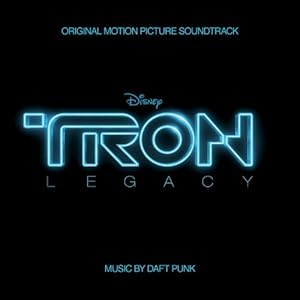
Daft Punk: Tron Legacy Soundtrack

While it may be considered unusual for a blog professing an interest in electronica works from yesteryear to review a 2010 soundtrack by one of the biggest names in the House Music genre, this album deserves a special mention for its notable compositional merit.


Dart punk themselves are a french duo who first came into the public eye with their 1997 release 'Homework' which compiled previous minor single and EP releases from 1993 onwards. Since then, they have released 3 studio albums and 2 live albums in total, as well as a number of singles, compilations and their soundtrack to the 2010 film 'Tron: Legacy.'During their career, the duo have enjoyed 5 Grammy nominations and 2 Grammy awards in 2009: Best dance recording and Best electronic/dance album.


The album contains 22 tracks, with various additional tracks exclusively available from different online outlets. Among them is the most recognisable track, 'Derezzed' which was also released as a promotional single. The music throughout fuses orchestral writing for an 85-piece orchestra with typical daft punk electronic instrumentation added. As a soundtrack album, the writing style sets it apart from many other examples, however Daft punk do at points employ typical film music writing techniques, with the main theme recurring throughout.

The album manages to combine many contrasting moods without losing continuity. The brooding 'Solar Sailer' also is a highlight of the album alongside 'End of the Line' and 'Derezzed.' This is a notable example of film music for lovers of electronica.

A remix album, 'Tron: Legacy - Reconfigured' has also subsequently been released.
Save on Delicious

Tangerine Dream: Booster

Tangerine Dream first became a household name after the increasing attention received since their first experimental music releases in the late 70s. As an early proponent of Krautrock along with Kraftwerk and similar bands, Tangerine Dream first began by creating avant-garde pieces making use of early analog synthesisers. As their career advanced and Tangerine Dream refined their sound, they became highly influential in the development of the 'New Age' musical genre and inspired several other acts, such as Enigma.

The 'Booster' compilation contains a total of 16 tracks across 2 CDs and serves as a tasteful retrospective for the bands output, including excerpts from 'Logos' and 'Tangram.' Alongside examples of Tangerine Dreams past hits, the album includes several lesser known tracks and some more recent compositions. The album itself includes several tracks recorded live, alongside several studio compositions, the sonic quality however is truly remarkable, this album is indeed very well mixed to sound crisp with great attention to detail.

The first track, 'One Night In Space' is a masterpiece in its own right and establishes the sequencer driven electronica style which is seen throughout the entire album. It is unsurprising that this has been incorporated into many of their live sets of late. With that said, most of the album is more ambient than the first track, serving as great background music. The hypnotic quality of 'The Greek Mirror' for instance reminds the listener of the bands roots in new age music but in a much more sophisticated electronica soundworld.

Overall, this album remains one of my personal favourites of all time, containing some truly exceptional examples of electronica which remains unparalleled by any other band. A later expansion to the 'Booster' Series, 'Booster Volume II' is reviewed here.
Save on Delicious

Thursday, 23 June 2011

Jean Michel Jarre: Oxygene

French composer Jean Michel Jarre, son of the famous film composer Maurice Jarre, celebrated breakthrough success in December 1976 with the release of his seminal first major album, 'Oxygene,' which has sold an estimated total of 12 million copies. This album became highly influential due to the combination of Jarre's grandiose french film music writing style with a strong electronica influence, realised with purely analog sysnthesisers. Jarre has released a total of 18 studio albums and sold an estimated 80 million units to date.


Jean Michel Jarre: Oxygene

The album contains a total of seven tracks labelled as 'Part I,' 'Part II,' Part III' and so forth. The most recognisable tracks, parts II and IV demonstrate early Trance music techniques through the form and instrumentation chosen, also creating the two most memorable melodies from the album.

While the later tracks don't quite hit the mark in the same way those mentioned above do, as a whole this album takes the listener on a remarkable musical journey that few albums since have rivalled. Jean Michel himself attempted this with the subsequent release of 'Oxygene 7-13,' which is reviewed here, however the slight naive charm of 'Oxygene' remains largely unmatched.

For the review to Jarre's 1978 follow up, 'Equinoxe,' click here.
Save on Delicious

Kraftwerk: Autobahn


During November 1974, the German Krautrock outfit Kraftwerk released their fourth studio album, 'Autobahn.' This album saw a refinement to their more experimental previous sound and set the foundation for their definitive electronic music style. This is widely considered as the first major Kraftwerk release and their 'commercial breakthrough,' paving the way for a musical career that continues to this day and a further seven studio albums.

The title track, the 22-minute epic 'Autobahn' was edited into a single version which reached number 25 on the US Billboard Hot 100 chart and number 11 on the UK charts. This track epitomises the hypnotic atmospheres seen in many of Kraftwerk's output through the use of an extended arrangement with minimal instrumentation and material. The album continues with 'Kometenmelodie' ('Comet Melody'), 'Mitternachht' ('Midnight') and 'Morgenspaziergang' ('A Morning Stroll') which illustrate a more ambient style of writing.

This album represents a key milestone in the development of electronic music, Kraftwerk would later go on to refine their style and famously inspire a great number of synthpop acts from the late 70's and 80's, earning them the titles such as 'The Godfathers Of Electronic Music' and 'The Electronic Beatles'. No other act has been more influential on the development of today's pop music.
Save on Delicious