Showing posts with label Ambient. Show all posts

Wednesday, 17 August 2011

Enigma: Le Roi Est Mort, Vive Le Roi!

Having previously covered the debut release by the electronica musical project Enigma 'MXMXC A.D' in an article here, the topic of this feature turns to their third commercial release 'Le Roi Est Mort, Vive Le Roi!' which was released in 1996, six years after the highly successful release of 'MCMXC A.D. .' This album built upon the success of its predecessors, quickly garnering critical acclaim alongside commercial success, obtaining platinum status in four territories.

Enigma: Le Roi Est Mort, Vive Le Roi!
Le Roi est mort, vive le Roi ! - Enigma

As alluded to in the track 'Third Of Its Kind,' this album is considered a child of the first two major Enigma projects, with 'MCMXC A.D.' being the father and 'The Cross Of Changes' the mother. Stylistically this is true also, with similar production techniques common to both albums but greater refinement of some aspects, responsible for a more sophisticated sound.

The album begins with a two minute title-track introduction. At this point in their career, Enigma clearly show great ability to create a highly effective introduction to their work, instantly establishing a context within which the remaining tracks are placed in terms of sound world and greater meaning. Comparing the introduction of this album with 'Hello And Welcome,' the corresponding introduction track on 'MCMXC A.D.,' the more sophisticated and futuristic approach mentioned earlier is clear. With that in mind, Enigma's development of their compositional aesthetic displays great awareness of their previous work, giving their output a remarkable sense of continuity.

Interestingly, tracks including 'Beyond The Invisible' and 'The Roundabout' favour ethnic chants rather than the gregorian chants which were commonplace throughout the musical project's early output. This makes it particularly comparable to 'Ile Aye,' a track from a 2008 Schiller album 'Desire,' reviewed here. The similarity is evidentiary of the great influence Enigma, particularly their 1990's output, possesses upon this field of music still today.


This album marks a turning point for Enigma, with many considering this to be their finest release. It certainly contains some notable material, 'The Roundabout,' 'TNT For The Brain,' 'Why!' and 'Beyond The Invisible' each a highlight of the album. The music on offer presents a highly appealing development of ambient music within a popular music context.
Save on Delicious

Tangerine Dream: The Island Of The Fay

With the 2011 release of ‘The Endless Season,’ reviewed here, the end of Tangerine Dream’s long running Five Atomic Seasons series was marked. Invigorated by the success and popularity of this programmatic series, the band quickly released ‘The Island Of The Fay,’ the first in a new series, the Eastgate Sonic Poems series, setting to poetry to music. This particular release takes as its basis ‘The Island Of The Fay’ by Edgar Allan Poe, published in 1841.

Tangerine Dream: The Island Of The Fay
Tangerine Dream


The poem itself revolves around a fantasy setting of an island occupied by fairies, ultimately leading to the conclusion in which the narrator compares the death of a fairy with the fading sight of a tree in darkening water. The work ends by depicting the fade into complete darkness.

The album begins with ‘Beauty Of Magic Antagonism,’ which sets the tone for the entire release, one of melancholic optimism. Sonically, the release clearly occupies a similar soundworld seen in the Five Atomic Seasons series, comparable best with the concluding work in the series, ‘The Endless Season.’ The band combine their trademark harpsichord timbres with various electronic overtones and background sequenced elements, presenting a very well rounded and precise sonic palette which is further enhanced by the releases commendable clarity of production.

The band’s output can often be characterised by large anthemic writing using a thick multitude of textures or as more ambient writing with a calculated thinner number of textures. ‘Breath Kissing Matter’s Mouth’ falls into the latter category and is remarkable in the way in which despite being led largely by a long running sequence, the music retains a fascinating element which draws the listener in and retains their attention throughout the nine-minute duration.


The concluding track, ‘Moment Of Floating Into The Light’ finally realises the allusions to optimism which occur as brief references throughout the album. Ultimately however the piece descends into a tone of mystery as the sound finally fades into the darkness Poe so suggested. As the first in a new series, it would be premature to base great assumptions based upon a single work, but this release lays a firm foundation for a number of eagerly anticipated sequels.

Save on Delicious

Tuesday, 16 August 2011

Schiller: Desire

The Sonic Music Review recently featured a review of 'Let Me Love You' here, the first song on Schiller's 2008 album 'Desire.' At this point we are pleased to offer a full feature which covers the rest of this remarkable album. For those unfamiliar with Schiller, the German artist typically writes in an uncommon methodology which combines elements of post-trance with ambient music. This form of writing, which is comparable to Enigma who rose to fame during the 1990's, is typically mislabeled as 'New Age Music' largely due to the sound world such releases typically create, a label not endorsed by the artist. This album features some of Schiller's finest work to date, featuring several collaborations with other artists and singers.

Schiller: Desire
Desire - Schiller

The album opens with the beautiful rendition of 'Let Me Love You,' previously featured here, before moving on to the first of the instrumental works on the album, 'Heartbeat,' which reader's could be forgiven for confusing with instrumental Enigma or even Tangerine Dream output. This track illustrates well the ability of Schiller to combine rich synthetic textures with subtle moving sequences to create a commendable ambient inspired work. The musical references to ambient composers later turn to proponents of dance/chillout music - the track 'Breathe' for instance, which features the singer September, is highly reminiscent of Chicane's output, particularly 'Offshore' which appears on their 'Best Of' album reviewed here. 

Moving to a later track 'Ile Aye,' the ties to the Enigma musical project are revealed most clearly, even going as far as to include elements of foreign chant which typified Engima's output which combined this with a very similar sound world exhibited here. Of all the material on offer here however, 'Lonely,' which like 'Ile Aye' features the female singer Stephenie Coker, shines as one of the album's highlights. To some listeners, the slight cliched writing which audibly panders to the pop music aesthetic may detract from the song, but it remains a well executed example of Schiller's most commercial output. 

It is curious that Klaus Schultze, best known as a prolific electronic artist and, for a time, member of the German band Tangerine Dream whose releases have frequently adorned the pages of The Sonic Music Review, features as a collaborator with Schiller on the track 'Zenith.' This track exemplifies a convergence of the two artist's already comparable styles in a manner that many fans of ambient electronica will highly appreciate.


From the highlights of Schiller's collaborative songwriting with Kim Sanders, Stephenie Coker et al. to the instrumental works such as the hauntingly nostalgic 'Wunschtraum,' this album contributes greatly to the ever expanding repertoire in the burgeoning Ambient Post-Trance musical tradition and is well worth a listen.
Save on Delicious

Monday, 15 August 2011

Schiller Feat. Kim Sanders: Let Me Love You

Ahead of an upcoming review of the 2008 'Desire' album by Schiller, The Sonic Music Review is pleased to feature the first track from the album, 'Let Me Love You,' in a deservedly separate article. Like most Schiller output, this track stylistically comes from a convergence of post-trance and ambient music which is best compared to the Enigma Musical Project whose greatest hits album, 'Love Sensuality Devotion,' is reviewed here.

Schiller featuring Kim Sanders: 'Let Me Love You' from 'Desire'

Let Me Love You - Desire


The track begins with a brooding introduction, led by ethnic flute drones which lead to the first exposition of a synthetic riff which underpins much of the music. This is followed soon after by the pulsing bass ostinato which gives the piece a firm initial rhythmic grounding. As the vocals enter, sung brilliantly by Kim Sanders, the African American singer based in Germany, the contour of the musical textures become crystallised, establishing her smooth voice reminiscent of Madonna as the leading timbre in this track.

Instrumentation varies throughout in order to create an interesting and varied arrangement which at its most complex consists of Electronica beats reminiscent of the French duo Air coupled with bass ostinatos, vocal melodies and rich synthetic pad backgrounds which generally typify ambient music. The style of writing is largely dependant on the hypnotic repetition of carefully contoured melodic phrases. The harmonic interplay between the melody and lush harmonic accompaniment adds to the timbral interest, particularly at the chorus sections where Sanders' powerful voice truly shines on a repeated musical theme which interacts in an audibly pleasing manner with the accompanying musical layers.


The song concludes with an extended outro, combining synthetic writing with shuffle electronic drum beats, again similar to Enigma writing. As the song concludes, a fitting sonic basis for the rest of the 'Desire' album is formed. This song is certainly a highlight of the album and a welcome addition to this reviewer's musical library.
Save on Delicious

Saturday, 13 August 2011

The Haxen Cloak: Hounfour (Temple)

For The Haxen Cloak, an ambient electronica artist, sonic imagery is everything. A response to the question of how the artist's name came about is testament to the value which is placed by the artist in this respect:
"I am sort of obsessed with pre-1900s imagery and text. I was heavily into reading about the Salem witch trials for a time. Haxan is an old German word for witch, which I always found sounded and looked intriguing and somehow beautiful."
 Contained within this interview are further biographical details regarding the artist, who notes an unconventional approach to composition which he fostered throughout a university degree in Sound Art. The artist also notes his extended experience, having composed for over 10 years.

The Haxen Cloak: 'Hounfour (Temple)' from 'ABX053'
Taken from the 2011 release 'ABX053,' 'Hounfour (Temple)' illustrates highly calculated ambient writing and some of the finest that can be found. Many fans of electronic music will be familiar with artists such as Brian Eno or Global Communication, the output from such artists constituting the most popular works within the field. The Haxen Cloak is clearly influenced by an alternative ambient scene, 'Hounfour (Temple)' for instance does not prescribe to the traditional timbral selections for ambient music, rather a Cagean aesthetic governs this track's sonic palette, which features several unexpected, but not to say inappropriate, timbres. This refreshingly alternative approach gives a notable joie de vivre to the track.

The track is in part informed by the creative practices of La Monte Young, expressed in the extended form which focuses on drone based composition. The powerful writing also features highly suggestive melodic components which do not constitute a complete melody, instead the listener forms an impression of a melody from the various resonances and textural elements which construct the track. This technique frequently eludes artists of electronic music, ambient composers to a lesser extent given the nature of their work, and so such an accomplished use is remarkable.

A superficial study of the piece's structure might brand it as a continuous ambient 'wash' of sound. More careful listening reveals clear sectional writing within the flow of sound and further analysis provokes a consideration of the purposeful and commendable construction of the musical layers within this piece. This track is a fine ambient work and it is a pleasure to feature on The Sonic Music Review.

More information can be found on the artist's website here.
Save on Delicious

Wednesday, 10 August 2011

Alva Noto and Ryuichi Sakamoto: Summvs


Following the release of multiple collaborative EP’s between Alva Noto and Ryuichi Sakamoto, including ‘Insen’ in 2005 which is reviewed here, the latest release in the series, ‘Summvs’ presents further refinement in this highly unusual combination of improvised piano performance and digital processing. This album also sees a more experimental approach of writing with a more sophisticate soundworld achieved through the digital processing of far more dissonant piano performance compared to some of the earlier releases in the series.

Alva Noto & Ryuichi Sakamoto: Summvs
Summvs - Alva Noto & Ryuichi Sakamoto


The release contains 10 tracks, running at approximately an hour in length. Some of the most interesting material lies within the trio of compositions entitled ‘Microon I’, II and III which illustrate a curiously ambient approach from Alva Noto who is best known as a proponent of the burgeoning glitch electronica tradition. As alluded to briefly earlier, throughout these tracks Sakamoto’s piano performance incorporates a more experimental approach to harmony, employing extended passages of dissonant chord constructions.

The ambient treatment of Sakamoto’s piano performance continues through to other tracks beyond the ‘Microon’ trio, tracks such as ‘Halo’ continue in this vein. In this track for example Noto creates extended sustained drones from a piano performance that at first could be mistaken as a Debussy work. From even a brief listen to the material on offer, the progression in terms of timbres achieved electronically from earlier releases in the series is conspicuous, as is an improved approach to audio production.


Having noted the enhancements to timbre achieved throughout this album, it is pertinent to mention in particular ‘Pioneer IOO’ which acts as a very interesting ‘missing link’ between Alva Noto’s glitch and ambient aesthetics, incorporating various glitch elements alongside the drone-based processing seen in other tracks. This occurs while Sakamoto creates a piano performance around a somewhat ‘bluesy’ scale set, later also using prepared piano techniques, originally introduced by John Cage, which blend well within this psudo-electronic setting.

This album proves to be one of the finest releases in Alva Noto’s series of collaborations with Sakamoto and remains highly original in its conceptual origins.


View Tracklisting

Save on Delicious

Tuesday, 9 August 2011

Tangerine Dream: Winter In Hiroshima


Following three previous releases in Tangerine Dream’s Five Atomic Seasons series, ‘Winter In Hiroshima,’ the fourth instalment, represents the penultimate release in the series. This release follows ‘Autumn In Hiroshima,’ retaining elements the sombre and dark style of writing which characterised that album, interjected with a greater sense of urgency and pace to the work. Stylistically this release sees noticeable development from its predecessor as the story of the Japanese businessman which approached the group’s youth throughout 1945 and the dropping of the first atomic bomb in Hiroshima nears its conclusion.
Tangerine Dream: Winter In Hiroshima
Winter In Hiroshima - Part Four From The Five Atomic Seasons - Tangerine Dream


‘Winter In Hiroshima’ opens with ‘Transition’ which through its writing style trivialises the premise of the work to paradoxically induce a greater sense of dread when this is considered as part of the larger work. This is followed by the third and final reference to Ayumi in the series in ‘Ayumi’s Loom.’ As no explanation of the programme is provided by the group other than brief outlines in ‘Springtime In Nagasaki’’s liner notes, the significance of Ayumi is unknown but one can assume that on the basis that no other character receives reference throughout the series, Ayumi is central to the story governing the work. ‘Ayumi’s Loom’ itself illustrates the more urgent and upbeat style of writing seen at several points in this release, adorned with long-running sequences, unusual percussive electronic timbres and further abstract instrumentation.

‘Outlook’ sees a Koto-like lead meandering through various harmonic constructs of which a tonal ambiguity, aural uncertainty regarding a major or minor tonal centre, creates an aurally fascinating quality to the track. This track is possibly the most ambient in style to appear on this album, which is in itself a reference to the charming naïve optimism expressed by the ambient style in several tracks from the first album in the series, ‘Springtime In Hiroshima.’


As ‘Glowing Vision’ signifies the beginning of the concluding track to this album, the listener is plunged into great uncertainty, established by the brooding harmonic and timbral elements in this track. As the track concludes, the tone is set for the beginning of ‘The Endless Season,’ the final instalment in the Five Atomic Seasons series which interestingly references ‘Trauma’ in the third chapter, ‘Autumn In Hiroshima,’ rather than any material from the release featured here.


View Tracklisting

Save on Delicious

Tuesday, 5 July 2011

Subsonic Winter: Scorched Ice

As part of ongoing reviews of works by independent artists alongside established stalwarts of the electronic music tradition, The Sonic Music Review presents a trio of works by Subsonic Winter. Effectively defenestrating any notion of impartiality with great aplomb but satisfying a desire for full disclosure, the artist here featured, Subsonic Winter, is an alias of The Sonic Music Review's cheif writer, Alex Harden.


CMC CW2 by Subsonic Winter

This trio of compositions begins with 'Scorched Ice,' a track which makes no secret of its influence from Tangerine Dream's output from their Independent years. The track begins with an exposition of a recurring theme, set in a dark and breathy timbre which immediately introduces the overriding brooding mood to this track. As the piece develops, additional musical material is added alongside development of the first section. Later, the piece becomes led by harmonic and sequenced material in place of melodic counterpoint, before returning for a final exposition of the primary theme which slowly crossfades into the following track, 'Wind Of Change.'

This second track takes on a more ambient style, taking a lead from Jean Michel Jarre's 'Geometry Of Love Album' (reviewed here). This track fuses a much slower rate of harmonic change and the extended use of sampled strings alongside various synthetic timbres which create a soothing atmosphere which contrasts against its predecessor. Another key element is the soundscape of singing birds and crickets which underpin the majority of the piece.

The third and final track, 'Aquamarine' exhibits a highly optimistic mood in comparison to the other tracks featured. This track also incorporates elements from trance music which is previously unseen. This short portfolio, lasting just over 13 minutes, was created as part of coursework for a degree in Creative Music Technology. If anyone has any comments or questions regarding this work or its conception, please contact the blog.
Save on Delicious

Sunday, 3 July 2011

Jean Michel Jarre: Geometry Of Love

During the early 00's, inside a market much more diverse than when Jean Michel Jarre first began composing in the 70's, Jarre released several works which deviate from his pre-established style seen in earlier releases. 'Geometry Of Love' follows the lounge jazz 'Sessions 2000' and dance 'Metamorphoses' releases, this time creating an Lounge Ambient influenced album.


Jean Michel Jarre: Geometry Of Love

Geometry Of Love - Jean Michel Jarre

Important for this release is the manner in which it was conceived. Rather than Jarre's early releases which were made from hardware synthesisers, this album was created primarily via the means of digital software sequencing. This creates a drastically different soundworld compared to all of the artist's previous output, creating a more 'open' sonic environment which employs timbres more congruent to Ambient music.

The album begins with a fusion of sampled strings with more conventional synthetic writing in track one, 'Pleasure Principal.' To its credit, this is a rare example of ambient music to employ drum and percussive elements without a breakbeat influence, which can detract from a composition's ambient quality. In lieu of clear melodies, this track uses more subtle musical material to lead the piece.

The album contains a two-part title track, interestingly separated, with 'Geometry Of Love part 2' only coming at the end of the album. These tracks have become part of several live sets by Jarre, including his 2005 performance in the Forbidden City in China.

This album contains a wealth of good material which fans of ambient music would enjoy. When the album concludes with the second part, which is written in a similar style but developing the musical ideas seen in part one, the nostalgic effect created proves highly calming and pleasantly disorientating.
Geometry Of Love - Jean Michel Jarre
Save on Delicious

Saturday, 2 July 2011

Chicane: The Best Of Chicane

Chicane, the British electronic act, is best known for their material which fuses dance, trance and ambient musics to create a combination of chill out and uptempo material in their various releases. 'The Best Of Chicane' is their 2008 compilation album, celebrating their biggest hits between 1996 and 2008.


Chicane: The Best Of Chicane

Best of Chicane - Chicane

The album begins with the band's first ever single, 'Offshore,' released in 2006. This mimics some of Tangerine Dream's more ambient work in its approach, but refines the style and lays idiomatic dance beats under the repeated phrases. Unsurprisingly, this particular track features both in a number of dance and chill out compilations.

Following 'Offshore' comes 'Bruised Water,' a collaboration between Chicane and Natasha Bedingfield. This compilation showcases a number of collaborations which the band have undertaken throughout their career, including their 2006 single 'Stoned In Love' featuring Tom Jones. The album, which contains 18 tracks lasting over an hour, serves as a fitting retrospective for the versatile work produced by Chicane, including a variety of their more commercial dance releases alongside more ambient inspired works such as 'Saltwater.'

The album concludes with possibly the most ambient track of the compilation, 'Early,' clear in its further use of trance/chill out writing. This track lends a sense of tranquility as the album draws to a close and, for fans of ambient music in particular, is well worth a listen even if in isolation from the rest of the album.
Best of Chicane - Chicane
Save on Delicious

Tuesday, 28 June 2011

The Orb: The Orb's Adventures Beyond The Ultraworld

The Orb, a musical act formed of Alex Paterson and various accomplices through the years, have become well known to many fans of Ambient House as one of the most influential and prolific acts within the genre. 'The Orb's Adventures Beyond The Ultraworld' is the act's widely acclaimed 1991 debut album which paved the way for the group's career which remains active today.


The Orb's Adventures Beyond the Ultraworld (Deluxe Edition) - The Orb

The album begins with the somewhat surreal 'Little Fluffy Clouds' which sets the tone for several of the tracks which follow. Interestingly, this track is a cover of a Terry Riley composition of many years previous. The second track on the album however shows more immediate stylistic links to ambient music with a noticeable breakbeat influence. The album continues, meandering through a variety of electronic genres which shows particular technical ability given the age of the album.

The concluding track, 'A Huge Ever Growing Pulsating Brain That Rules From The Centre Of The Ultraworld,' is one of the most significant Ambient House tracks of the 90's. This track is perhaps the most interesting track of the album, if the album is to be considered a collection of compositions rather than a singular whole. At 18 minutes long, this is the longest track of the album and sums up the psychedelic nature of the Orb's work.
The Orb's Adventures Beyond the Ultraworld (Deluxe Edition) - The Orb
Save on Delicious

Monday, 27 June 2011

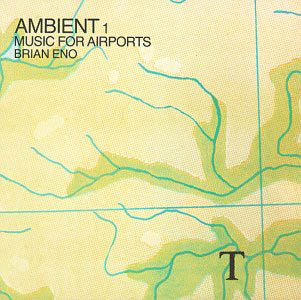
Brian Eno: Music For Airports

The landmark 1978 Eno album 'Music For Airports' is the first acknowledged ambient work, after Eno himself coined the term in the album's liner notes. Interestingly given this albums landmark status as an ambient work, this is actually Eno's 6th studio album after his 1974 debut.


The album is considered fairly experimental for its day, consisting of four tracks labelled '1/1,' '1/2,' '2/1' and '2/2' using only tape loops, a synthesiser and a piano to create the 48 minute total runtime. Brian Eno himself noted that this album was conceived to provide a musical backdrop which could be as interesting to the listener when both listening intently and when the music plays purely in the background.

'1/1' begins the album with a piano and synthesiser based piece. The composer noted that this piece was constructed from two tape loops of separate piano melodies which interact well together utilising the effect of phasing which is used throughout. Here, phrasing refers to the interaction between two tape loops of unequal length that will when played simultaneously go in and out of phase with one another.

'1/2' is constructed in a similar manner as the first track but uses phasing between tapes of sustained vocal notes. The phasing effect in this effect creates at points, lush harmonies, and at others, dissonances. This is possibly the most cited track of the album and also the most familiar to a contemporary ambient composer given today's primary use of electronic sound sources.

The vocal loops remain present in '2/2,' which adds a piano to the instrumentation, before the work's finale, '2/2.' This final track is perhaps the most experimental due to its use of harmony and reedy synthesiser instrumentation. Overall however, the variety and progression between tracks certainly enhance this album.
Save on Delicious

Sunday, 26 June 2011

Solipsism: Let's Watch The Sunrise

Since this blog's conception, it has been a personal aspiration to establish a service to the wider musical community. For this reason, it brings great pleasure to review Craig Murphy, aka. Solipsism's 'Let's Watch The Sunrise' mini-album, following a suggestion by the artist.


The album begins with a synthetic drone based title track, 'Let's Watch The Sunrise' which gradually evolves texturally with gentle overtones and gentle modulation effects. As seen in many New Age music, there is a noticeable Ambient influence and, to a degree, the La Monte Young school of Minimalist music composition.

The second track, 'No Destination In Mind' continues to evoke the calm mood expressed in its predecessor with thicker musical textures. This is also seen in the later track 'Horizon' which employs metallic rings and gently modulating undertones also seen later as the album reaches conclusion in 'MirrororriM.'

While some readers may be unfamiliar with the practices of New Age music, the calming atmospheres in this album make it a very appropriate introduction.

More information about Solipsism can be found at their website, http://www.solipsism.co.cc/.
Save on Delicious

Saturday, 25 June 2011

Alva Noto: Insen

Released in 2005 by Carsten Nicolai, better known as Alva Noto, in collaboration with pianist Ryuichi Sakamoto, Insen is the second album in an ongoing series by the duo. Alva Noto has to date released a total of 45 albums under various aliases since his 1996 debut 'spin.' This album however presents an intriguing marriage of ambient piano technique with Noto's distinctive Glitch Electronica composition.


Texturally, most of the album is quite minimal but with Noto's extensive treatment of piano to create grooves, sustains and even percussive rhythms, the album remains a highly credible work. Stylistically, the approach to composition features typical glitch technique but lacks the pace of much Noto material previously released and presents a series of 7 tracks, a total of 43 minutes, of intriguing pseudo-Ambient material.

In a way, for the attentive listener, the minimal instrumentation presents a slight tedium. For this reason, the 4th track, 'Moon,' deserves a special mention for its textural variety and construction of new additional timbres from Sakamoto's piano playing. Much of the album must be considered a complete work rather than a series of tracks, given the fantastic development throughout from its early minimal ambient beginnings to the more notable integration of glitch elements seen in 'Iano' and the highly processed sombre ending, 'Avaol.'

For a review of Noto's later 'Unitxt' album, click here.
Save on Delicious

Friday, 24 June 2011

Global Communication: '76:14'

While many readers may be unfamiliar with Global Communication, an ambient duo based in the UK, their debut album, simply entitled '76:14,' has received wide-spread critical acclaim. Frankly, for anyone with a Penchant for ambient music or downtempo soothing electronica, it's clear to see why this album received such praise.


The album begins with the brooding synthetic introduction portrayed by the first track, 4:02. This continues to build until a climactic conclusion at which point the haunting grand father clock crossfades in from the next track, '14:31.' The true strength of the album becomes clear from having listened to very little of the material on offer: Global Communication have an uncanny ability to give ambient music great interest for the attentive listener through their arrangements and choice of material.

The dysphoric introduction to the third track, '2:25' slowly evolves to incorporate a heavy beat which given the ambient beginnings to the album initially seems out of place, but it integrated well into the piece and contrasts well with the next track which seems to even draw inspiration weakly from Enigma and similar acts through it's use of a faux-New Age vibe which is also seen more overtly later in '5:23,' whose sequencer based synthetic rhythms and filtered white noise draw an instant comparison to 'Love on a Real Train' by Tangerine Dream.

This album is unashamedely a great ambient work, all the more due to the variety afforded the the expert use of material. The album takes the listener on a musical journey and serves as a brilliant musical backdrop to the daily grind. When one considers that this album was made in 1994, it's longevity and sustained relevance is a great credit to the English duo.
Save on Delicious