Showing posts with label New Age. Show all posts

Saturday, 15 October 2011

Tangerine Dream: Tyger

Some 25 years prior to the band's initiation of the Eastgate Sonic Poem series with 'The Island Of The Fay,' reviewed here, came the release of 'Tyger,' an album typical of their 80's output in style but featuring a brief foray into vocal melodies, courtesy of singer Jocelyn Bernadette Smith. This release takes as its inspiration selected William Blake poetry, specifically "The Tyger", "Smile", "America", "The Fly", and "London".
Tangerine Dream: Tyger
Tyger - Tangerine Dream

The album begins with 'Tyger,' perhaps some of the most accomplished writing in the album, drawing upon 80's production and musical aesthetics within the context of their own style which many fans will enjoy. In contrast to their more recent releases, this album focusses (as much of their 80's output does) on ethnic timbres and the creation of hybrid timbres which gave their releases at this time great sonic complexity ahead of many other artists in the field. This word music influence is of course unsurprising given the band's definition of an early New Age musical style.

Moving on to 'Alchemy Of The Heart,' the first instrumental track of the album, the writers combine various sequencer lines with sampled harpsichord writing and drum machine lines. Given the virtue of hindsight, it is very interesting to hear the elements which now underpin the band's music in an early form. In the track's mid section, the band utilise moving baselines aside long running sequences to create highly interesting patterns which sound equally at home in the context of their contemporary music (referring to the inclusion of 'Alchemy Of The Heart' in the set list for Tangerine Dream's recent Zeitgeist tour).


'Smile' sees a return to song writing, beginning with various sequences before Jocelyn Bernadette Smith enters powerfully. Particularly strong is the harmonic progressions in this piece. The usage of song format for the band suits their style in this regard as it accommodates the long repeated harmonic structures well. From a musicological point of view, the changes of metre in this track and the song's structure prove particularly interesting. For the listener, these smaller details may not be audible yet they add a great deal of interest to the music.

The 1987 release reviewed here ends with '21st Common Man,' a two part composition which exemplifies some of the most intriguing tambral aspects of the album. Listeners of the 1992 release will find an additional track 'Vigour' concludes the album. 21st Common Man provides an appropriate end to the album in a New Age style of writing embellished with instrumental solos which typified earlier writing. Overall, this album proves a highlight of the band's accomplished catalogue of works.
Save on Delicious

Monday, 26 September 2011

Christopher Franke: The London Concert

Many of The Sonic Music Review's readers will no doubt be familiar with the German band Tangerine Dream whom have been featured a number of times on the site. Lesser known to some is Christopher Franke, an electronica composer and long time member of Tangerine Dream, having joined in 1971 and remaining a member until 1988. After leaving the group, Christopher Franke soon returned to electronic music production, subsequently releasing a number of albums under his own name in the New Age musical style that he previously pioneered as a member of Tangerine Dream.

Christopher Franke: The London Concert
London Concert - Christopher Franke

'The London Concert' is Franke's 1993 release of a collection of live material recorded during a concert at The Royal Apollo Theatre, London in 1991. The album opens with a group of five tracks, referred to as parts 1 - 5. The first part, 'Empire Of Light' illustrates Franke's awareness and skill at ambient composition, unsurprising given the strong relationship with his own new age aesthetic and ambient musics. This brooding introduction combines various processed samples with synthetic dissonances to create a highly cinematic atmosphere, a quality seen in much of his work. Moving to part 2: 'Purple Waves,' the listener is afforded a more conventional electronic musicality in the work which later develops to include extended sequenced passages.

One of the most instantly recognisable tracks from Tangerine Dream's 1979 release Force Majeure, 'Cloudburst Flight,' for which Franke also features on the credits, is covered in part 3 of this release. Most interesting is the way in which the artist recontextualises the piece into a notably meeker recording than the original work, focussing on several of the lesser elements in the 1979 version and redefining the instrumentation into a more clearly New Age inspired sonic palette.


The concluding three tracks which forgo the previous convention of being entitled 'parts' embellish the artist's New Age aesthetic with additional creative influences. Considering 'Mountain Heights,' the use of an electric guitar alongside synthetic instrumentation suggests a progressive rock methodology. The final track, 'Private Diaries' ends the release on a high with a soaring pan flute melody atop various sequences and well considered backing timbres. Overall, this release is a very welcome live album and many fans of Tangerine Dream will certainly enjoy.
Save on Delicious

Saturday, 3 September 2011

ElectroCelt: Ocean Reef

As part of The Sonic Music Review's ongoing championing of original electronic music talent, it is with great pleasure that we feature 'Ocean Reef,' a 2011 EP by the electronic artist Geoff Keogh, better known by his recording name ElectroCelt. The artist's career began with the release of the 2008 album 'Digital Fields' which led to the subsequent release of further material. Having signed to Bubblectro Records the artist released the 'Ocean Reef' EP, featuring material from the upcoming release 'Strange Elements.'

ElectroCelt: 'Ocean Reef'
The artist in their biography, available here, contextualises their creative practice within the aesthetics of acts such as Tangerine Dream. These acts themselves have frequently featured on The Sonic Music Review, setting a fearsome standard for artists influenced by them to achieve. The first track, 'Emerald Sand' even goes as far as to reference Tangerine Dream tracks, for one with an introductory sample highly reminiscent of the imitative birdsong in Tangerine Dream's 'White Clouds' and later with an overt reference to 'Stratosfear' as the track approaches its conclusion.

Much of the material on offer fuses sequenced synthetic elements with well programmed percussion and a large number of complementary musical textures which combine to give a highly cinematic quality to the work, at times informed by the aesthetics of ambient music and at other points the music takes on several core characteristics of european music, creating a great degree of excitement and dynamism which captures and sustains the listener's avid interest.

Timbrally, much of the work boasts great sophistication, a production value inherited from the various acts which influence ElectroCelt. Considering the quality of mixing, an area often complicated greatly with the interaction of multiple musical layers, the artist once more deserves praise for the clarity of the material on offer.

ElectroCelt during a 2010 live performance
As the album draws to a close in the final track, 'Subzero Limits,' the artist displays commendable consideration for the narrative arc, shaping the album through the evolution and development of musical moods. This particular track largely consists of synthetic pads and electric guitar, underpinned by the soft movements of a sequenced bassline. This combination is brought together to create a very soothing work which functions well as ambient music.

Overall, the 'Ocean Reef' EP displays a great talent from the artist, with a sophisticated and conscious approach to composition that many artists would do well to note. It has been a great pleasure to feature on The Sonic Music Review and we wish ElectroCelt every success with their future endeavours. To find out more, their Reverbnation page can be found here.

If you represent original Electronic music talent and wish to submit your music to The Sonic Music Review, please get in touch, we'd love to hear from you.
Save on Delicious

Wednesday, 17 August 2011

Enigma: Le Roi Est Mort, Vive Le Roi!

Having previously covered the debut release by the electronica musical project Enigma 'MXMXC A.D' in an article here, the topic of this feature turns to their third commercial release 'Le Roi Est Mort, Vive Le Roi!' which was released in 1996, six years after the highly successful release of 'MCMXC A.D. .' This album built upon the success of its predecessors, quickly garnering critical acclaim alongside commercial success, obtaining platinum status in four territories.

Enigma: Le Roi Est Mort, Vive Le Roi!
Le Roi est mort, vive le Roi ! - Enigma

As alluded to in the track 'Third Of Its Kind,' this album is considered a child of the first two major Enigma projects, with 'MCMXC A.D.' being the father and 'The Cross Of Changes' the mother. Stylistically this is true also, with similar production techniques common to both albums but greater refinement of some aspects, responsible for a more sophisticated sound.

The album begins with a two minute title-track introduction. At this point in their career, Enigma clearly show great ability to create a highly effective introduction to their work, instantly establishing a context within which the remaining tracks are placed in terms of sound world and greater meaning. Comparing the introduction of this album with 'Hello And Welcome,' the corresponding introduction track on 'MCMXC A.D.,' the more sophisticated and futuristic approach mentioned earlier is clear. With that in mind, Enigma's development of their compositional aesthetic displays great awareness of their previous work, giving their output a remarkable sense of continuity.

Interestingly, tracks including 'Beyond The Invisible' and 'The Roundabout' favour ethnic chants rather than the gregorian chants which were commonplace throughout the musical project's early output. This makes it particularly comparable to 'Ile Aye,' a track from a 2008 Schiller album 'Desire,' reviewed here. The similarity is evidentiary of the great influence Enigma, particularly their 1990's output, possesses upon this field of music still today.


This album marks a turning point for Enigma, with many considering this to be their finest release. It certainly contains some notable material, 'The Roundabout,' 'TNT For The Brain,' 'Why!' and 'Beyond The Invisible' each a highlight of the album. The music on offer presents a highly appealing development of ambient music within a popular music context.
Save on Delicious

Tangerine Dream: The Island Of The Fay

With the 2011 release of ‘The Endless Season,’ reviewed here, the end of Tangerine Dream’s long running Five Atomic Seasons series was marked. Invigorated by the success and popularity of this programmatic series, the band quickly released ‘The Island Of The Fay,’ the first in a new series, the Eastgate Sonic Poems series, setting to poetry to music. This particular release takes as its basis ‘The Island Of The Fay’ by Edgar Allan Poe, published in 1841.

Tangerine Dream: The Island Of The Fay
Tangerine Dream


The poem itself revolves around a fantasy setting of an island occupied by fairies, ultimately leading to the conclusion in which the narrator compares the death of a fairy with the fading sight of a tree in darkening water. The work ends by depicting the fade into complete darkness.

The album begins with ‘Beauty Of Magic Antagonism,’ which sets the tone for the entire release, one of melancholic optimism. Sonically, the release clearly occupies a similar soundworld seen in the Five Atomic Seasons series, comparable best with the concluding work in the series, ‘The Endless Season.’ The band combine their trademark harpsichord timbres with various electronic overtones and background sequenced elements, presenting a very well rounded and precise sonic palette which is further enhanced by the releases commendable clarity of production.

The band’s output can often be characterised by large anthemic writing using a thick multitude of textures or as more ambient writing with a calculated thinner number of textures. ‘Breath Kissing Matter’s Mouth’ falls into the latter category and is remarkable in the way in which despite being led largely by a long running sequence, the music retains a fascinating element which draws the listener in and retains their attention throughout the nine-minute duration.


The concluding track, ‘Moment Of Floating Into The Light’ finally realises the allusions to optimism which occur as brief references throughout the album. Ultimately however the piece descends into a tone of mystery as the sound finally fades into the darkness Poe so suggested. As the first in a new series, it would be premature to base great assumptions based upon a single work, but this release lays a firm foundation for a number of eagerly anticipated sequels.

Save on Delicious

Tuesday, 9 August 2011

Tangerine Dream: Winter In Hiroshima


Following three previous releases in Tangerine Dream’s Five Atomic Seasons series, ‘Winter In Hiroshima,’ the fourth instalment, represents the penultimate release in the series. This release follows ‘Autumn In Hiroshima,’ retaining elements the sombre and dark style of writing which characterised that album, interjected with a greater sense of urgency and pace to the work. Stylistically this release sees noticeable development from its predecessor as the story of the Japanese businessman which approached the group’s youth throughout 1945 and the dropping of the first atomic bomb in Hiroshima nears its conclusion.
Tangerine Dream: Winter In Hiroshima
Winter In Hiroshima - Part Four From The Five Atomic Seasons - Tangerine Dream


‘Winter In Hiroshima’ opens with ‘Transition’ which through its writing style trivialises the premise of the work to paradoxically induce a greater sense of dread when this is considered as part of the larger work. This is followed by the third and final reference to Ayumi in the series in ‘Ayumi’s Loom.’ As no explanation of the programme is provided by the group other than brief outlines in ‘Springtime In Nagasaki’’s liner notes, the significance of Ayumi is unknown but one can assume that on the basis that no other character receives reference throughout the series, Ayumi is central to the story governing the work. ‘Ayumi’s Loom’ itself illustrates the more urgent and upbeat style of writing seen at several points in this release, adorned with long-running sequences, unusual percussive electronic timbres and further abstract instrumentation.

‘Outlook’ sees a Koto-like lead meandering through various harmonic constructs of which a tonal ambiguity, aural uncertainty regarding a major or minor tonal centre, creates an aurally fascinating quality to the track. This track is possibly the most ambient in style to appear on this album, which is in itself a reference to the charming naïve optimism expressed by the ambient style in several tracks from the first album in the series, ‘Springtime In Hiroshima.’


As ‘Glowing Vision’ signifies the beginning of the concluding track to this album, the listener is plunged into great uncertainty, established by the brooding harmonic and timbral elements in this track. As the track concludes, the tone is set for the beginning of ‘The Endless Season,’ the final instalment in the Five Atomic Seasons series which interestingly references ‘Trauma’ in the third chapter, ‘Autumn In Hiroshima,’ rather than any material from the release featured here.


View Tracklisting

Save on Delicious

Saturday, 6 August 2011

Tangerine Dream: Summer In Nagasaki Review


Following on from the 2007 release of ‘Springtime In Nagasaki’ comes the release of the second instalment in Tangerine Dream’s Five Atomic Seasons series, entitled ‘Summer in Nagasaki.’ This instalment describes musically the summer of 1945 and ends with ’11:02 Am,’ which depicts the moment at which the first nuclear bomb was dropped in Japan.

Tangerine Dream: Summer In Nagasaki

Summer In Nagasaki - Tangerine Dream


The Release begins with ‘Climbing Mount Inasa,’ which follows stylistically on from ‘Persistence Of Memory Part Six,’ the final track of ‘Springtime In Nagasaki.’ Evident in this track are the band’s deliberate attempt to write in a style to suggest uncertainty within a perceivable aural sensation of neutrality. Throughout this track occurs also the impression of strain afforded from the harmonic movement of the introduction and later extended sequenced passages.

The following track, ‘In The Cherry Blossom Hills,’ retains several characteristics from the previous track but develops into what becomes a more upbeat and, for the most part, less brooding track. The opposing moods continue throughout the release. ‘Mystery Of Life And Death’ introduces a foreboding sense of danger and to the novice musicologist would reward academic study for its suggestion of melody from moving harmony as well as several other musical elements.


Moving on to a later track, ‘Ayumi’s Butterflies’ is perhaps some of the finest writing on the release, or at least some of the most accessible for listeners who favour the group’s more consonant writing. This track sets to music a much more optimistic subject matter, underpinned by a shuffle drum beat and particularly interesting syncopated bassline. This particular track is the standout must-listen from the album.

The concluding track crystallises the suggestion of danger seen musically throughout the album and ends as the nuclear bomb falls, setting to music the impending tragedy which ensued. As the track ends, the die is cast for ‘Trauma’ and the rest of the following album in the series, ‘Autumn In Hiroshima.’


View Tracklisting

Save on Delicious

Friday, 5 August 2011

Tangerine Dream: Springtime In Nagasaki


2007 marked the release of ‘Springtime In Nagasaki,’ the first in a series of five releases later named The Five Atomic Seasons which were commissioned by a Japanese survivor of the 1945 dropping of the first atomic bomb. This, the first in the series, describes musically the Spring of 1945 when the commissioner, in his youth, was living in Nagasaki.

Tangerine Dream: Springtime In Nagasaki
Springtime In Nagasaki - Tangerine Dream


Interestingly, when one compares this the first release of the series with ‘The Endless Season,’ reviewed here, the final release in the series, a large difference in styles is seen. While ‘The Endless Season’ is typical of the group’s contemporary writing from their independent years, several of the tracks on this release are more akin to ambient writing. In particular, the second track, ‘Navel Of Light Part Two’ follows several of the aesthetic constructs from the Ambient music tradition, creating a soundscape of pseudo-water droplets with brief interjections of classical musical references.

The six tracks which feature on this release emerge from two larger works - ‘Navel Of Light’ and ‘Persistence Of Memory,’ which are both divided into separate parts. Regarding ‘Persistence Of Memory,’ the atmosphere of the music takes on an altogether darker oeuvre, with ‘Persistence of Memory Part Four’ revisiting the idea of the suggested aquatic landscape of ‘Navel Of Light Part Two’ incorporating a revised sound-world which uses more distorted timbres. The writing at this point further develops the music’s connotations, introducing an element of urgency. As an interesting side-note, this is not only due to the writing, but the production also , given the prominence of the brooding bass frequencies within this track.


As ‘Persistence Of Memory’ continues, the listener hears a juxtaposition in character between parts four and five, with the latter reconciling the brooding and dysphoric musical notions of the former with notably easier listening. This continues into the concluding part, which begins in an upbeat style which verges on sounding ‘merry,’ although the music later does suggest a state of blissful naivety, a forerunner to the following releases in the series which suggest the presence of danger and later trauma.

View Tracklisting

Save on Delicious

Monday, 18 July 2011

Tangerine Dream: Tangram

Released in 1980, 'Tangram' came at a pivotal point in the German band Tangerine Dream's career, meeting at the crossroads of their previous extended form sequencer-based compositions and their decidedly New Age material which was yet to come. It also came as the band introduced a new member Johannes Schmoelling to the group, but despite turbulent circumstances for the band, 'Tangram' went on to become the fifth best selling release from the band, unsurprising when one listens to the album.


Tangerine Dream: Tangram

The album itself consists of simply two tracks: 'Tangram Set 1' and 'Tangram Set 2,' overall lasting an approximate duration of 40 minutes. In the later release, 'Tangram 2008,' these two tracks are divided into seven in total and many of the timbres have been altered.

Track one begins with a moderate paced sequence which underpins the initial section, embellished with an emphatic descending bass partern, later developing harmonically and progressing to include the defining antiphonal analogue brass melody which defines that part of the set. What is notable about the first set is the apparent influence which progressive rock has given, leading to a slightly experimental application of metre and form. This influence from progressive rock contrasts heavily with the final section of the set, which sees a much more subtle and calming quality.

The second track of the album begins with synthesised strings which undergo various suspensions, drawing some similarity in writing to some of Jean Michel Jarre's output in the late 1970's. As the piece develops, sequencers provide a more upbeat underpinning to the music and a strong melody is soon added. A bridge between the two distinct tracks in set 2 revisits the band's much earlier Krautrock begins in its experimental use of noise and non-musical sound. This also occurs later while the synthetic drones which end the set fade in and gradually take the primary focus.

A later compilation, 'Booster,' features a rather fine excerpt from Tangram and is reviewed here.
Save on Delicious

Tuesday, 5 July 2011

Subsonic Winter: Scorched Ice

As part of ongoing reviews of works by independent artists alongside established stalwarts of the electronic music tradition, The Sonic Music Review presents a trio of works by Subsonic Winter. Effectively defenestrating any notion of impartiality with great aplomb but satisfying a desire for full disclosure, the artist here featured, Subsonic Winter, is an alias of The Sonic Music Review's cheif writer, Alex Harden.


CMC CW2 by Subsonic Winter

This trio of compositions begins with 'Scorched Ice,' a track which makes no secret of its influence from Tangerine Dream's output from their Independent years. The track begins with an exposition of a recurring theme, set in a dark and breathy timbre which immediately introduces the overriding brooding mood to this track. As the piece develops, additional musical material is added alongside development of the first section. Later, the piece becomes led by harmonic and sequenced material in place of melodic counterpoint, before returning for a final exposition of the primary theme which slowly crossfades into the following track, 'Wind Of Change.'

This second track takes on a more ambient style, taking a lead from Jean Michel Jarre's 'Geometry Of Love Album' (reviewed here). This track fuses a much slower rate of harmonic change and the extended use of sampled strings alongside various synthetic timbres which create a soothing atmosphere which contrasts against its predecessor. Another key element is the soundscape of singing birds and crickets which underpin the majority of the piece.

The third and final track, 'Aquamarine' exhibits a highly optimistic mood in comparison to the other tracks featured. This track also incorporates elements from trance music which is previously unseen. This short portfolio, lasting just over 13 minutes, was created as part of coursework for a degree in Creative Music Technology. If anyone has any comments or questions regarding this work or its conception, please contact the blog.
Save on Delicious

Wednesday, 29 June 2011

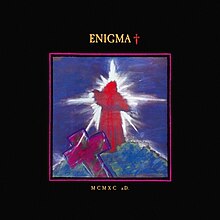
Enigma: MCMXC A.D.

Released in December 1990, the musical project Enigma's debut album quickly soared to the top of the charts to become the most successful album in the Virgin record label's catalogue at the time. The album has since received more than 60 platinum awards worldwide and by 1994 had already sold 14 million units.

Enigma: MCMXC A.D.

McMxc A.D. - Enigma

The album begins with 'Hello And Welcome' which features the iconic Enigma horn and the spoken voice bidding the listener a good evening, ushering the listener into a "world of music, spirit and meditation." Instantly noticeable is the New Age approach to music and through the spoken vocal part, a parallel spiritualistic motif.

The next track of the album consists of a medley of 'Sadeness,' 'Principals of Lust,' and a reprisal of 'Sadeness' each crossfaded together to create a continuous work. Throughout, dance beats are married with New Age style musical writing and overt sexual overtones from the vocal line. 'Sadeness' was to become the first single release from the album.

A later track, 'Mea Culpa' is written in a similar style to 'Sadeness,' using gregorian chant alongside dance beats and Shakuhatchi (often thought to be a pan pipe) writing, the style which Enigma used extensively throughout the 90's. The track uses lyrics written in french an latin and, in its single release, was titled 'Mea Cupa (Part 2),' referencing 'Sadeness' as part 1.

For its time and even now, this work was groundbreaking and established Enigma as a unique act with a highly unusual writing style which ultimately led to great commercial success.

For a review of Enigma's later greatest hits album, 'Love Sensuality Devotion,' click here.
McMxc A.D. - Enigma
Save on Delicious

Tuesday, 28 June 2011

Tangerine Dream: The Endless Season

'The Endless Season' marks the close of Tangerine Dream's Five Atomic Seasons series with 11 track, a total of over an hour in duration, of some of the finest material from the series.


Tangerine Dream: The Endless Season

Tangerine Dream

The album begins with the shortest introductory track, 'Flashback,' which samples the marvellous 'Trauma' from part four in the Five Atomic Seasons series, 'Autumn In Hiroshima.' This leads into the more mysterious and darker 'Devotion' which makes extensive use of metallic and distorted guitar lines with innocent and naive flute writing towards the end of the track, segueing into 'Virtue Of Hope.'

In this reviewer's opinion, the fourth track, 'Escape,' is some of the finest material in the album. In typical contemporary Tangerine Dream output, the track fuses electronic drums with typical use of sequenced backdrops. The track also exhibits the group's typical use of extended form and very smooth harmony.

A later track, 'Logic Of Intuition,' characterises the theme of uncertainty and anxiety which is seen throughout the album. This track begins pleasantly before becoming increasingly frantic as it reaches the next track.

For fans of the band's early 00's output, 'Wild Oceans Of Blue Fate' ticks all the right boxes but illustrates the band's ever increasing attention to finding new and interesting timbres. Overall however, this album will prove a good listen for fans of any Tangerine Dream material from their independent years.
Tangerine Dream
Save on Delicious

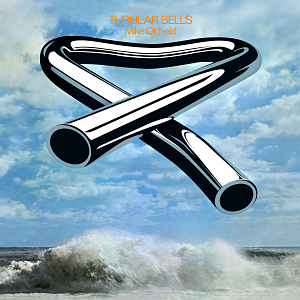
Mike Oldfield: Tubular Bells

'Tubular Bells' is the seminal progressive rock and arguably New Age debut record by Mike Oldfield, released in 1973 and famed for being the first release on the Virgin Records music label which ensured the company a solid commercial beginning. Among the personnel list are no fewer than 19 instruments credited to Oldfield himself, alongside a further 8 instrumentalists.

Mike Oldfield: Tubular Bells

Tubular Bells (Remastered) - Mike Oldfield

The album contains just 2 tracks, with the most recognisable theme from the album seen in the opening of track 1 which was used famously in 'The Exorcist.' The track shows great versatility from Oldfield as a performer and as an artist with the highly technical nature of the material. Typical of progressive rock music, the album contains a number of key and time changes which give a disjointed feel which is idiomatic of this genre.

The second track of the album is constructed in a similar manner to the first track, weaving thematic material and manipulating it with some skill. The thick instrumentation seen throughout has also been subject to careful design and gives the album its own unique character not paralleled with some other works of the period.

The album concludes with an excerpt of 'The Sailor's Hornpipe' which many will find familiar and serves as a fitting finale for this somewhat 'quirky' album. Unsurprisingly given the commercial success of the album, Mike Oldfield has had over 30 charting albums to appear on UK charts.
Tubular Bells (Remastered) - Mike Oldfield
Save on Delicious

Sunday, 26 June 2011

Solipsism: Let's Watch The Sunrise

Since this blog's conception, it has been a personal aspiration to establish a service to the wider musical community. For this reason, it brings great pleasure to review Craig Murphy, aka. Solipsism's 'Let's Watch The Sunrise' mini-album, following a suggestion by the artist.


The album begins with a synthetic drone based title track, 'Let's Watch The Sunrise' which gradually evolves texturally with gentle overtones and gentle modulation effects. As seen in many New Age music, there is a noticeable Ambient influence and, to a degree, the La Monte Young school of Minimalist music composition.

The second track, 'No Destination In Mind' continues to evoke the calm mood expressed in its predecessor with thicker musical textures. This is also seen in the later track 'Horizon' which employs metallic rings and gently modulating undertones also seen later as the album reaches conclusion in 'MirrororriM.'

While some readers may be unfamiliar with the practices of New Age music, the calming atmospheres in this album make it a very appropriate introduction.

More information about Solipsism can be found at their website, http://www.solipsism.co.cc/.
Save on Delicious

Friday, 24 June 2011

Global Communication: '76:14'

While many readers may be unfamiliar with Global Communication, an ambient duo based in the UK, their debut album, simply entitled '76:14,' has received wide-spread critical acclaim. Frankly, for anyone with a Penchant for ambient music or downtempo soothing electronica, it's clear to see why this album received such praise.


The album begins with the brooding synthetic introduction portrayed by the first track, 4:02. This continues to build until a climactic conclusion at which point the haunting grand father clock crossfades in from the next track, '14:31.' The true strength of the album becomes clear from having listened to very little of the material on offer: Global Communication have an uncanny ability to give ambient music great interest for the attentive listener through their arrangements and choice of material.

The dysphoric introduction to the third track, '2:25' slowly evolves to incorporate a heavy beat which given the ambient beginnings to the album initially seems out of place, but it integrated well into the piece and contrasts well with the next track which seems to even draw inspiration weakly from Enigma and similar acts through it's use of a faux-New Age vibe which is also seen more overtly later in '5:23,' whose sequencer based synthetic rhythms and filtered white noise draw an instant comparison to 'Love on a Real Train' by Tangerine Dream.

This album is unashamedely a great ambient work, all the more due to the variety afforded the the expert use of material. The album takes the listener on a musical journey and serves as a brilliant musical backdrop to the daily grind. When one considers that this album was made in 1994, it's longevity and sustained relevance is a great credit to the English duo.
Save on Delicious

Enigma: 'Love Sensuality Devotion - The Greatest Hits'

The Enigma Musical Project is estimated to have sold in excess of 50 million albums and this 2001 greatest hits compilation release 'Love Sensuality Devotion' certainly contains some noteworthy material. The musical project themselves, led by Michel Cretu, is known for the New Age music influenced writing which combines dance and traditional chant elements, a highly original premise at the time of the act's debut.

Enigma: Love Sensuality Devotion
Love Sensuality Devotion - The Greatest Hits - Enigma


The album begins with the brief reference to the 'Enigma horn' which has featured on every album previous, before introducing 'Turn Around,' which in typical Enigma style combines electronic textures and vocals with world instruments, a strong shuffle beat and not forgetting the use of gregorian chants - a stalwart of the Enigma sound.

The Album continues to include the expected hits such as 'Sadeness Part 1' which was almost a worldwide number 1, alongside some Enigma's lesser known output. The album does however give a clear sense of intelligent design through the 'flow' and continuity throughout. Most of the album fuses New Age elements with Dance music beats which fans will have grown to expect but tracks that veer away from the dance influence, such as 'Principals of Lust' and 'Return To Innocence,' prove to be some of the most rewarding musical experiences of the album, certainly worth of a listen.


For a review of Enigma's debut release, 'MCMXC A.D.,' click here.
Save on Delicious