Showing posts with label Experimental. Show all posts

Wednesday, 31 August 2011

Neu! - Neu!

Following the second world war, Germany saw a great rise in the production and popularity of avant grade and experimental music. In this era the early Kraftwerk lineup was formed, as was the first iteration of 
Tangerine Dream, both of whom have been featured on numerous pages across The Sonic Music Review. This era also gave birth to Neu!, the experimental krautrock group who are retrospectively credited as being one of the most influential bands of their type from that era.

Neu! - Neu!
Neu! - Neu!

The album opens with 'Hallogallo,' an initial exposition of the pulsing repetitive beats which defined the psychedelic movement from which the band found a significant influence. This is adorned by overtones from processed electric guitar which form the basis of the piece melodically and harmonically. This then gives way to 'Sonderangebot' which is led by the processed metallic scratches of cymbals and gongs yet nonetheless rewards the carful listener with what is in fact a carefully structured piece.

While 'Hallogallo' relies strongly on beat based composition, the later track 'Weissensee' gives an altogether different musical atmosphere from the use of electronic drones which take the main focus in spite of being a 'background' texture. This method of composition likens it to an unformed genre of pseudo-ambient music, a term not coined until Brain Eno's seminal 'Music For Airports' release, reviewed here.

When listening to 'Negativland,' also the name of an unrelated plunderphonics act, the audible ties to progressive rock are clear, while the band embellish the form and instrumentation with experimentalism which would later define Krautrock as a genre in its own right. Given the widespread influence this initial release has given, this is certainly a must-hear for any fans of the early fusion of electronics within a rock context. In spite of commercial non-success, this album is a very proud addition to any musical library.
Save on Delicious

Wednesday, 10 August 2011

AustraLYSIS: Nuraghic Echoes

AustraLYSIS are a little known Australian musical project, specialising in laptop composition and processing of typically spoken word by poet Hazel Smith. This reviewer first encountered the band following a workshop given by the trio in 2011 and subsequent performance where a recording of 'Nuraghic Echoes' was purchased. This particular release tells the story of the Nuraghe, constructions by the Nuraghic civilisation during the bronze age.

AustraLYSIS: Nurachic Echoes
austraLYSIS


Firstly, it is important to note that the music reviewed here is of a style that may be unfamiliar to some readers of The Sonic Music Review, consisting of processing of live spoken word, accompanied by various elements of Acousmatic composition. In this regard, this release is perhaps comparable to the better known collaborative works between Alva Noto and Ryuichi Sakamoto, such as 'Summvs,' reviewed here.
In this setting however, the use of spoken word introduces deeper meaning to the music. Interestingly Smith's creative exploration of vocal timbre to produce unusual constructions, such as percussive and comic elements as first explored performers such as Cathy Berberian's 'Stripsody.'

The release itself consists of two tracks, dominated by the first, the title track 'Nuraghic Echoes.' Throughout this track, the performers explore various surrounding the Nuraghi and their origins, the early emigration to Australia and life thereafter. This is accompanied by sparse electronic elements, produced from synthesis, sound processing of Smith's performance and processing of additional sound samples. As the piece develops, a wide variety of processing is evident on Smith's performance, becoming increasingly processed using varying techniques which highlight a remarkable use of technology which by today's standards would be considered highly limited.

Moving onto 'The Riting Of The Runda,' the style moves to a more experimental form of spoken word, with a lessened emphasis on digital processing, at least at first. This again proves to be a highly engaging work, in no small part due to the brooding and disturbing setting of poetry. Considering the release as a whole, this is a highly interesting work, building upon the strong Australian tradition of sound poetry in a highly innovative and original way.
austraLYSIS
Save on Delicious

Sunday, 10 July 2011

Wendy Carlos: The Well-Tempered Synthesizer

Walter Carlos, now 'Wendy' following her gender reassignment in the 70's, found fame for the release of 'Switched On Bach,' a collection of virtuosic synthesiser performances of Bach compositions, reviewed in detail here. The great commercial success achieved with her debut secured several further releases, including this 1969 follow up to her debut, 'The Well Tempered Synthesizer.'


Wendy Carlos: The Well-Tempered Synthesizer

Wendy Carlos

The 1999 remastered album, which is reviewed here, contains 12 musical tracks as well as an interesting vocal commentary and stereo alignment tones to calibrate systems in the by-gone era where reliable stereo sound had not permeated into the majority of living rooms. Unlike Carlos' previous album, 'The Well Tempered Synthesizer' contains tracks by Monteverdi, Domenico Scarlatti, and Handel as well as Bach. 

The performances contained within this album of Handel's Water Music and Bach's Brandenburg Concerto once more show Carlos' virtuosic ability at her craft. The 'Allegro Deciso' movement from Handel's water music is a truly vibrant and playful take on the work. Following the three movements from Handel come Scarlatti's Harpsichord Sonatas in E and D. The sonata in E once more exhibits the admirable range of timbres Carlos achieves with her Moog Modular system.

The Brandenburg Concerto performances are again of great quality, in particular the dysphoric introduction of the 'Andante' movement. The third movement, 'Presto,' revisits the playful and light-hearted nature of several tracks previous. Like the entire album, the music is crystal clear and makes highly creative use of the stereo field, two aspects of Carlos' music which have remained with her from the very start of her career.

Like the previous 'Switched On Bach' album, this release serves as a fantastic decadent exhibition of an electronic take on classical music, highly praise-worthy for both its originality and quality of performance.
Wendy Carlos
Save on Delicious

Monday, 4 July 2011

Soulwax: Part Of The Weekend Never Dies

In 2006, Soulwax, the electronic music duo from Belgium, released a rockumentary and accompanying live album of their 2006 'Part Of The Weekend Never Dies' tour. The live CD comprises of material from various previous releases in their own unique dance-punk style.


Soulwax: Part Of The Weekend Never Dies

Soulwax

The album begins with 'Teachers,' an uptempo homage to the duo's spiritual fathers, quoting names such as Van Halen among their other influences. The track begins with a gradual accelerando, once the tempo is reached however, the pace remains throughout the entire album. This track is followed by 'Move My Body,' which also begins with a brief excerpt of 'Theme From Discotheque' which was released under the alias of Soulwax, Samantha Fu. Throughout the album, the pair sample numerous works produced both by Soulwax and other aliases, as well as other established acts.

Later in the album come 'E-Talking' and 'Another Excuse,' both of which fans will know from earlier Soulwax releases. This live performance of both tracks injects even more energy into the the tracks than was seen in the original releases, likening them even more stylistically to the French duo Justice.

It is this reviewer's belief that anyone who has seen the duo perform live, either as Soulwax or their 2ManyDJs counterpart, will testify that their live performances remain largely unparalleled in terms of energy. This release presents a highly exciting series of performances which show off the duo's material at its finest. While the CD/DVD set is no replacement for being at a live gig, the music on this release serves as a great example of the duo's exuberance during a live set.
Soulwax
Save on Delicious

Tuesday, 28 June 2011

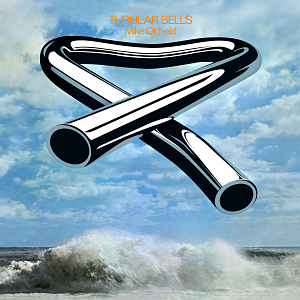
Mike Oldfield: Tubular Bells

'Tubular Bells' is the seminal progressive rock and arguably New Age debut record by Mike Oldfield, released in 1973 and famed for being the first release on the Virgin Records music label which ensured the company a solid commercial beginning. Among the personnel list are no fewer than 19 instruments credited to Oldfield himself, alongside a further 8 instrumentalists.

Mike Oldfield: Tubular Bells

Tubular Bells (Remastered) - Mike Oldfield

The album contains just 2 tracks, with the most recognisable theme from the album seen in the opening of track 1 which was used famously in 'The Exorcist.' The track shows great versatility from Oldfield as a performer and as an artist with the highly technical nature of the material. Typical of progressive rock music, the album contains a number of key and time changes which give a disjointed feel which is idiomatic of this genre.

The second track of the album is constructed in a similar manner to the first track, weaving thematic material and manipulating it with some skill. The thick instrumentation seen throughout has also been subject to careful design and gives the album its own unique character not paralleled with some other works of the period.

The album concludes with an excerpt of 'The Sailor's Hornpipe' which many will find familiar and serves as a fitting finale for this somewhat 'quirky' album. Unsurprisingly given the commercial success of the album, Mike Oldfield has had over 30 charting albums to appear on UK charts.
Tubular Bells (Remastered) - Mike Oldfield
Save on Delicious

Monday, 27 June 2011

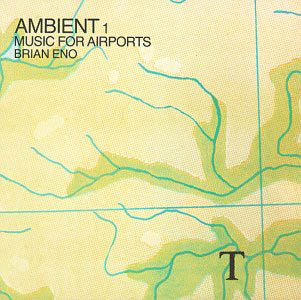
Brian Eno: Music For Airports

The landmark 1978 Eno album 'Music For Airports' is the first acknowledged ambient work, after Eno himself coined the term in the album's liner notes. Interestingly given this albums landmark status as an ambient work, this is actually Eno's 6th studio album after his 1974 debut.


The album is considered fairly experimental for its day, consisting of four tracks labelled '1/1,' '1/2,' '2/1' and '2/2' using only tape loops, a synthesiser and a piano to create the 48 minute total runtime. Brian Eno himself noted that this album was conceived to provide a musical backdrop which could be as interesting to the listener when both listening intently and when the music plays purely in the background.

'1/1' begins the album with a piano and synthesiser based piece. The composer noted that this piece was constructed from two tape loops of separate piano melodies which interact well together utilising the effect of phasing which is used throughout. Here, phrasing refers to the interaction between two tape loops of unequal length that will when played simultaneously go in and out of phase with one another.

'1/2' is constructed in a similar manner as the first track but uses phasing between tapes of sustained vocal notes. The phasing effect in this effect creates at points, lush harmonies, and at others, dissonances. This is possibly the most cited track of the album and also the most familiar to a contemporary ambient composer given today's primary use of electronic sound sources.

The vocal loops remain present in '2/2,' which adds a piano to the instrumentation, before the work's finale, '2/2.' This final track is perhaps the most experimental due to its use of harmony and reedy synthesiser instrumentation. Overall however, the variety and progression between tracks certainly enhance this album.
Save on Delicious

Sunday, 26 June 2011

Solipsism: Let's Watch The Sunrise

Since this blog's conception, it has been a personal aspiration to establish a service to the wider musical community. For this reason, it brings great pleasure to review Craig Murphy, aka. Solipsism's 'Let's Watch The Sunrise' mini-album, following a suggestion by the artist.


The album begins with a synthetic drone based title track, 'Let's Watch The Sunrise' which gradually evolves texturally with gentle overtones and gentle modulation effects. As seen in many New Age music, there is a noticeable Ambient influence and, to a degree, the La Monte Young school of Minimalist music composition.

The second track, 'No Destination In Mind' continues to evoke the calm mood expressed in its predecessor with thicker musical textures. This is also seen in the later track 'Horizon' which employs metallic rings and gently modulating undertones also seen later as the album reaches conclusion in 'MirrororriM.'

While some readers may be unfamiliar with the practices of New Age music, the calming atmospheres in this album make it a very appropriate introduction.

More information about Solipsism can be found at their website, http://www.solipsism.co.cc/.
Save on Delicious

Walter Carlos: Switched On Bach

The 1968 Walter (later 'Wendy') Carlos album 'Switched On Bach' album is the rather interesting Classical / Experimental music curio which introduced a great many to the Moog Synthesizer, paving the way for the slew of 70's acts to use the machine as their primary instrument. The album also marks its place in history as a breakthrough electronic album which will forever be one of the first classical music based albums to achieve platinum status.


The albums track listing contains, as the title suggests, a series of performances of Bach works, including a remarkable performance of the Brandenburg Symphony and three of Bach's Two-part Inventions. Most listeners unfamiliar with classical music will probably at least recognise Carlos' performance of Jesu, Joy Of Man's Desiring.

When one considers the album's advanced years, there is a truly remarkable attention paid to mixing the album - each of the tracks sound crisp with fantastic attention to articulations and dynamics, rather than a flat compressed amplitude, and Carlos' use of the stereo field puts the album far ahead of its time in this regard.

While the album has been very carefully mixed, all performances featured on the album have clearly been subject to great care, with impressive variety of timbre and expression. Every track contains a multitude of synthetic instrumentation and shows Carlos' expertise with their craft, not to mention the versatility of the Moog system. This album is without doubt one of the best exposition of the great variety possible with a synthesiser, given a skilled operator with the know-how and imagination to pull off such a feat as Walter Carlos.

Unsurprisingly, following the great success of 'Switched On Bach,' Carlos continued with a variety of projects including several follow up albums and soundtrack credits including 'Tron' and 'A Clockwork Orange.' For a review of the 1969 release 'The Well Tempered Synthesizer,' click here.
Save on Delicious