Showing posts with label Electronica. Show all posts

Saturday, 15 October 2011

Tangerine Dream: Tyger

Some 25 years prior to the band's initiation of the Eastgate Sonic Poem series with 'The Island Of The Fay,' reviewed here, came the release of 'Tyger,' an album typical of their 80's output in style but featuring a brief foray into vocal melodies, courtesy of singer Jocelyn Bernadette Smith. This release takes as its inspiration selected William Blake poetry, specifically "The Tyger", "Smile", "America", "The Fly", and "London".
Tangerine Dream: Tyger
Tyger - Tangerine Dream

The album begins with 'Tyger,' perhaps some of the most accomplished writing in the album, drawing upon 80's production and musical aesthetics within the context of their own style which many fans will enjoy. In contrast to their more recent releases, this album focusses (as much of their 80's output does) on ethnic timbres and the creation of hybrid timbres which gave their releases at this time great sonic complexity ahead of many other artists in the field. This word music influence is of course unsurprising given the band's definition of an early New Age musical style.

Moving on to 'Alchemy Of The Heart,' the first instrumental track of the album, the writers combine various sequencer lines with sampled harpsichord writing and drum machine lines. Given the virtue of hindsight, it is very interesting to hear the elements which now underpin the band's music in an early form. In the track's mid section, the band utilise moving baselines aside long running sequences to create highly interesting patterns which sound equally at home in the context of their contemporary music (referring to the inclusion of 'Alchemy Of The Heart' in the set list for Tangerine Dream's recent Zeitgeist tour).


'Smile' sees a return to song writing, beginning with various sequences before Jocelyn Bernadette Smith enters powerfully. Particularly strong is the harmonic progressions in this piece. The usage of song format for the band suits their style in this regard as it accommodates the long repeated harmonic structures well. From a musicological point of view, the changes of metre in this track and the song's structure prove particularly interesting. For the listener, these smaller details may not be audible yet they add a great deal of interest to the music.

The 1987 release reviewed here ends with '21st Common Man,' a two part composition which exemplifies some of the most intriguing tambral aspects of the album. Listeners of the 1992 release will find an additional track 'Vigour' concludes the album. 21st Common Man provides an appropriate end to the album in a New Age style of writing embellished with instrumental solos which typified earlier writing. Overall, this album proves a highlight of the band's accomplished catalogue of works.
Save on Delicious

Saturday, 3 September 2011

ElectroCelt: Ocean Reef

As part of The Sonic Music Review's ongoing championing of original electronic music talent, it is with great pleasure that we feature 'Ocean Reef,' a 2011 EP by the electronic artist Geoff Keogh, better known by his recording name ElectroCelt. The artist's career began with the release of the 2008 album 'Digital Fields' which led to the subsequent release of further material. Having signed to Bubblectro Records the artist released the 'Ocean Reef' EP, featuring material from the upcoming release 'Strange Elements.'

ElectroCelt: 'Ocean Reef'
The artist in their biography, available here, contextualises their creative practice within the aesthetics of acts such as Tangerine Dream. These acts themselves have frequently featured on The Sonic Music Review, setting a fearsome standard for artists influenced by them to achieve. The first track, 'Emerald Sand' even goes as far as to reference Tangerine Dream tracks, for one with an introductory sample highly reminiscent of the imitative birdsong in Tangerine Dream's 'White Clouds' and later with an overt reference to 'Stratosfear' as the track approaches its conclusion.

Much of the material on offer fuses sequenced synthetic elements with well programmed percussion and a large number of complementary musical textures which combine to give a highly cinematic quality to the work, at times informed by the aesthetics of ambient music and at other points the music takes on several core characteristics of european music, creating a great degree of excitement and dynamism which captures and sustains the listener's avid interest.

Timbrally, much of the work boasts great sophistication, a production value inherited from the various acts which influence ElectroCelt. Considering the quality of mixing, an area often complicated greatly with the interaction of multiple musical layers, the artist once more deserves praise for the clarity of the material on offer.

ElectroCelt during a 2010 live performance
As the album draws to a close in the final track, 'Subzero Limits,' the artist displays commendable consideration for the narrative arc, shaping the album through the evolution and development of musical moods. This particular track largely consists of synthetic pads and electric guitar, underpinned by the soft movements of a sequenced bassline. This combination is brought together to create a very soothing work which functions well as ambient music.

Overall, the 'Ocean Reef' EP displays a great talent from the artist, with a sophisticated and conscious approach to composition that many artists would do well to note. It has been a great pleasure to feature on The Sonic Music Review and we wish ElectroCelt every success with their future endeavours. To find out more, their Reverbnation page can be found here.

If you represent original Electronic music talent and wish to submit your music to The Sonic Music Review, please get in touch, we'd love to hear from you.
Save on Delicious

Wednesday, 17 August 2011

Tangerine Dream: The Island Of The Fay

With the 2011 release of ‘The Endless Season,’ reviewed here, the end of Tangerine Dream’s long running Five Atomic Seasons series was marked. Invigorated by the success and popularity of this programmatic series, the band quickly released ‘The Island Of The Fay,’ the first in a new series, the Eastgate Sonic Poems series, setting to poetry to music. This particular release takes as its basis ‘The Island Of The Fay’ by Edgar Allan Poe, published in 1841.

Tangerine Dream: The Island Of The Fay
Tangerine Dream


The poem itself revolves around a fantasy setting of an island occupied by fairies, ultimately leading to the conclusion in which the narrator compares the death of a fairy with the fading sight of a tree in darkening water. The work ends by depicting the fade into complete darkness.

The album begins with ‘Beauty Of Magic Antagonism,’ which sets the tone for the entire release, one of melancholic optimism. Sonically, the release clearly occupies a similar soundworld seen in the Five Atomic Seasons series, comparable best with the concluding work in the series, ‘The Endless Season.’ The band combine their trademark harpsichord timbres with various electronic overtones and background sequenced elements, presenting a very well rounded and precise sonic palette which is further enhanced by the releases commendable clarity of production.

The band’s output can often be characterised by large anthemic writing using a thick multitude of textures or as more ambient writing with a calculated thinner number of textures. ‘Breath Kissing Matter’s Mouth’ falls into the latter category and is remarkable in the way in which despite being led largely by a long running sequence, the music retains a fascinating element which draws the listener in and retains their attention throughout the nine-minute duration.


The concluding track, ‘Moment Of Floating Into The Light’ finally realises the allusions to optimism which occur as brief references throughout the album. Ultimately however the piece descends into a tone of mystery as the sound finally fades into the darkness Poe so suggested. As the first in a new series, it would be premature to base great assumptions based upon a single work, but this release lays a firm foundation for a number of eagerly anticipated sequels.

Save on Delicious

Monday, 15 August 2011

Schiller Feat. Kim Sanders: Let Me Love You

Ahead of an upcoming review of the 2008 'Desire' album by Schiller, The Sonic Music Review is pleased to feature the first track from the album, 'Let Me Love You,' in a deservedly separate article. Like most Schiller output, this track stylistically comes from a convergence of post-trance and ambient music which is best compared to the Enigma Musical Project whose greatest hits album, 'Love Sensuality Devotion,' is reviewed here.

Schiller featuring Kim Sanders: 'Let Me Love You' from 'Desire'

Let Me Love You - Desire


The track begins with a brooding introduction, led by ethnic flute drones which lead to the first exposition of a synthetic riff which underpins much of the music. This is followed soon after by the pulsing bass ostinato which gives the piece a firm initial rhythmic grounding. As the vocals enter, sung brilliantly by Kim Sanders, the African American singer based in Germany, the contour of the musical textures become crystallised, establishing her smooth voice reminiscent of Madonna as the leading timbre in this track.

Instrumentation varies throughout in order to create an interesting and varied arrangement which at its most complex consists of Electronica beats reminiscent of the French duo Air coupled with bass ostinatos, vocal melodies and rich synthetic pad backgrounds which generally typify ambient music. The style of writing is largely dependant on the hypnotic repetition of carefully contoured melodic phrases. The harmonic interplay between the melody and lush harmonic accompaniment adds to the timbral interest, particularly at the chorus sections where Sanders' powerful voice truly shines on a repeated musical theme which interacts in an audibly pleasing manner with the accompanying musical layers.


The song concludes with an extended outro, combining synthetic writing with shuffle electronic drum beats, again similar to Enigma writing. As the song concludes, a fitting sonic basis for the rest of the 'Desire' album is formed. This song is certainly a highlight of the album and a welcome addition to this reviewer's musical library.
Save on Delicious

Saturday, 13 August 2011

The Haxen Cloak: Hounfour (Temple)

For The Haxen Cloak, an ambient electronica artist, sonic imagery is everything. A response to the question of how the artist's name came about is testament to the value which is placed by the artist in this respect:
"I am sort of obsessed with pre-1900s imagery and text. I was heavily into reading about the Salem witch trials for a time. Haxan is an old German word for witch, which I always found sounded and looked intriguing and somehow beautiful."
 Contained within this interview are further biographical details regarding the artist, who notes an unconventional approach to composition which he fostered throughout a university degree in Sound Art. The artist also notes his extended experience, having composed for over 10 years.

The Haxen Cloak: 'Hounfour (Temple)' from 'ABX053'
Taken from the 2011 release 'ABX053,' 'Hounfour (Temple)' illustrates highly calculated ambient writing and some of the finest that can be found. Many fans of electronic music will be familiar with artists such as Brian Eno or Global Communication, the output from such artists constituting the most popular works within the field. The Haxen Cloak is clearly influenced by an alternative ambient scene, 'Hounfour (Temple)' for instance does not prescribe to the traditional timbral selections for ambient music, rather a Cagean aesthetic governs this track's sonic palette, which features several unexpected, but not to say inappropriate, timbres. This refreshingly alternative approach gives a notable joie de vivre to the track.

The track is in part informed by the creative practices of La Monte Young, expressed in the extended form which focuses on drone based composition. The powerful writing also features highly suggestive melodic components which do not constitute a complete melody, instead the listener forms an impression of a melody from the various resonances and textural elements which construct the track. This technique frequently eludes artists of electronic music, ambient composers to a lesser extent given the nature of their work, and so such an accomplished use is remarkable.

A superficial study of the piece's structure might brand it as a continuous ambient 'wash' of sound. More careful listening reveals clear sectional writing within the flow of sound and further analysis provokes a consideration of the purposeful and commendable construction of the musical layers within this piece. This track is a fine ambient work and it is a pleasure to feature on The Sonic Music Review.

More information can be found on the artist's website here.
Save on Delicious

Sunday, 7 August 2011

Tangerine Dream: Autumn In Hiroshima


Autumn In Hiroshima is the third instalment in Tangerine Dream’s Five Atomic Seasons series. This 2008 release rejoins the musical narrative following the dropping of the first nuclear bomb in Hiroshima at the finale of the last album, ‘Summer In Nagasaki,’ reviewed here. For those unfamiliar with the Five Atomic Series, a brief introduction is provided at the beginning of the ‘Springtime In Nagasaki’ review here. Unlike the preceding instalments in the Five Atomic Seasons, this album features a larger number of tracks, dominated by 8 ‘teachings’ set to music.

Tangerine Dream: Autumn In Hiroshima
Autumn In Hiroshima - Tangerine Dream


This album opens with the seminal track ‘Trauma,’ one of the finest examples of electronic music of our time. As such, ‘Trauma’ has received a separate review here in order to cover the track in sufficient detail. The following track ‘Reset’ maintains the soundworld of trauma in a more ambient musical context which also gradually suggests partial optimism as the track progresses. This Ambient style of writing continues through ‘Awareness (1st Teaching),’ which makes extended use of western classical church-like vocal harmonies.

Moving on to the later track ‘Oracular World (4th Teaching),’ the ambient style of writing has been replaced with a more typical example of Tangerine Dream writing, supported by a steady, yet unintrusive, beat throughout. The later ‘Touching Truth’ in fact references the band’s earlier output during their so-called Blue Years. The way in which a large number go the tracks on this album transition smoothly between one another proves worth note as this in itself speaks volumes about the band’s production values. Seemingly paramount to this release is a sense of flow. This is particularly well achieved with reference to the music’s emotional subtext, smoothly segueing with the music to form a narrative of emotions and moods expressed by the music to echo the narrative to this programmatic work.

In each of the releases in Tangerine Dream’s Five Atomic Seasons series, the penultimate and final tracks typically prove to be particularly interesting, providing an indication for the music which follows in the following instalment. When attention is paid to the final two tracks, ‘Omniscience (8th Teaching)’ and ‘Nothing And All’ respectively, a heavily sequence-led track is juxtaposed with an ambient successor, indicatory of uncertain times ahead, although the smoother ambient nature of writing induces a sense of calm in stark contrast to the beginning of the release here featured.


As ‘Nothing And All’ reaches its inevitable conclusion, the listener is plunged into silence once more in preparation for the following chapter in the series, ‘Winter In Hiroshima.’


View Tracklisting

Save on Delicious

Saturday, 6 August 2011

Tangerine Dream: Summer In Nagasaki Review


Following on from the 2007 release of ‘Springtime In Nagasaki’ comes the release of the second instalment in Tangerine Dream’s Five Atomic Seasons series, entitled ‘Summer in Nagasaki.’ This instalment describes musically the summer of 1945 and ends with ’11:02 Am,’ which depicts the moment at which the first nuclear bomb was dropped in Japan.

Tangerine Dream: Summer In Nagasaki

Summer In Nagasaki - Tangerine Dream


The Release begins with ‘Climbing Mount Inasa,’ which follows stylistically on from ‘Persistence Of Memory Part Six,’ the final track of ‘Springtime In Nagasaki.’ Evident in this track are the band’s deliberate attempt to write in a style to suggest uncertainty within a perceivable aural sensation of neutrality. Throughout this track occurs also the impression of strain afforded from the harmonic movement of the introduction and later extended sequenced passages.

The following track, ‘In The Cherry Blossom Hills,’ retains several characteristics from the previous track but develops into what becomes a more upbeat and, for the most part, less brooding track. The opposing moods continue throughout the release. ‘Mystery Of Life And Death’ introduces a foreboding sense of danger and to the novice musicologist would reward academic study for its suggestion of melody from moving harmony as well as several other musical elements.


Moving on to a later track, ‘Ayumi’s Butterflies’ is perhaps some of the finest writing on the release, or at least some of the most accessible for listeners who favour the group’s more consonant writing. This track sets to music a much more optimistic subject matter, underpinned by a shuffle drum beat and particularly interesting syncopated bassline. This particular track is the standout must-listen from the album.

The concluding track crystallises the suggestion of danger seen musically throughout the album and ends as the nuclear bomb falls, setting to music the impending tragedy which ensued. As the track ends, the die is cast for ‘Trauma’ and the rest of the following album in the series, ‘Autumn In Hiroshima.’


View Tracklisting

Save on Delicious

Friday, 5 August 2011

Tangerine Dream: Springtime In Nagasaki


2007 marked the release of ‘Springtime In Nagasaki,’ the first in a series of five releases later named The Five Atomic Seasons which were commissioned by a Japanese survivor of the 1945 dropping of the first atomic bomb. This, the first in the series, describes musically the Spring of 1945 when the commissioner, in his youth, was living in Nagasaki.

Tangerine Dream: Springtime In Nagasaki
Springtime In Nagasaki - Tangerine Dream


Interestingly, when one compares this the first release of the series with ‘The Endless Season,’ reviewed here, the final release in the series, a large difference in styles is seen. While ‘The Endless Season’ is typical of the group’s contemporary writing from their independent years, several of the tracks on this release are more akin to ambient writing. In particular, the second track, ‘Navel Of Light Part Two’ follows several of the aesthetic constructs from the Ambient music tradition, creating a soundscape of pseudo-water droplets with brief interjections of classical musical references.

The six tracks which feature on this release emerge from two larger works - ‘Navel Of Light’ and ‘Persistence Of Memory,’ which are both divided into separate parts. Regarding ‘Persistence Of Memory,’ the atmosphere of the music takes on an altogether darker oeuvre, with ‘Persistence of Memory Part Four’ revisiting the idea of the suggested aquatic landscape of ‘Navel Of Light Part Two’ incorporating a revised sound-world which uses more distorted timbres. The writing at this point further develops the music’s connotations, introducing an element of urgency. As an interesting side-note, this is not only due to the writing, but the production also , given the prominence of the brooding bass frequencies within this track.


As ‘Persistence Of Memory’ continues, the listener hears a juxtaposition in character between parts four and five, with the latter reconciling the brooding and dysphoric musical notions of the former with notably easier listening. This continues into the concluding part, which begins in an upbeat style which verges on sounding ‘merry,’ although the music later does suggest a state of blissful naivety, a forerunner to the following releases in the series which suggest the presence of danger and later trauma.

View Tracklisting

Save on Delicious

Monday, 18 July 2011

Tangerine Dream: Tangram

Released in 1980, 'Tangram' came at a pivotal point in the German band Tangerine Dream's career, meeting at the crossroads of their previous extended form sequencer-based compositions and their decidedly New Age material which was yet to come. It also came as the band introduced a new member Johannes Schmoelling to the group, but despite turbulent circumstances for the band, 'Tangram' went on to become the fifth best selling release from the band, unsurprising when one listens to the album.


Tangerine Dream: Tangram

The album itself consists of simply two tracks: 'Tangram Set 1' and 'Tangram Set 2,' overall lasting an approximate duration of 40 minutes. In the later release, 'Tangram 2008,' these two tracks are divided into seven in total and many of the timbres have been altered.

Track one begins with a moderate paced sequence which underpins the initial section, embellished with an emphatic descending bass partern, later developing harmonically and progressing to include the defining antiphonal analogue brass melody which defines that part of the set. What is notable about the first set is the apparent influence which progressive rock has given, leading to a slightly experimental application of metre and form. This influence from progressive rock contrasts heavily with the final section of the set, which sees a much more subtle and calming quality.

The second track of the album begins with synthesised strings which undergo various suspensions, drawing some similarity in writing to some of Jean Michel Jarre's output in the late 1970's. As the piece develops, sequencers provide a more upbeat underpinning to the music and a strong melody is soon added. A bridge between the two distinct tracks in set 2 revisits the band's much earlier Krautrock begins in its experimental use of noise and non-musical sound. This also occurs later while the synthetic drones which end the set fade in and gradually take the primary focus.

A later compilation, 'Booster,' features a rather fine excerpt from Tangram and is reviewed here.
Save on Delicious

Saturday, 16 July 2011

The Prodigy: Invaders Must Die

Since forming in 1990, The Prodigy have divided critical opinion a great deal, while establishing a highly faithful fanbase in the mean time. 'Invaders Must Die' is the fifth studio album offering by the musical project and includes some of their most impressive material to date for fans of their music.


The Prodigy: Invaders Must Die
The album begins with the title track, 'Invaders Must Die,' also the first single to be released from the album. This track sees The Prodigy's typical DnB House method of composition with commendable interplay between bass line and synthetic overtones. The following track, 'Omen' continues with this unrelenting yet rather commercial style, later released as another single from the album.

Interestingly, later tracks, such as 'Take Me To The Hospital,' reference the more surreal earlier compositions by the band. 'Take Me To The Hospital' for instance is somewhat reminiscent of the duo's earlier track 'Out Of Space.' Such tracks lie alongside the much heavier offerings, such as 'Warrior Dance,' which presents a much harsher and distorted sound.

In this reviewer's opinion, some of the finest material lies in 'Omen Reprise' and the particularly notable remix of 'Invader's Must Die' by Chase And Status. This album presents a great refinement of the bands style, its sequel will be dearly anticipated.
Save on Delicious

Thursday, 7 July 2011

Jean Michel Jarre: Hong Kong

The French electronic musician Jean Michel Jarre, who rose to fame in the 1970's following his releases of Oxygene, reviewed here, and Equinoxe, reviewed here, among his performance credits owns the title of the first western musician to be allowed to perform in the People's Republic of China. Later in his career, during March 1994, Jarre performed in Hong Kong, subsequently releasing a live album documenting the performance.

Jean Michel Jarre: Hong Kong

Hong Kong - Jean Michel Jarre


The 1994 tour celebrated the recent release of Jarre's 'Chronologie' album. Unsurprisingly therefore, five of the eighteen tracks on the album are from the 'Chronologie' release, with 'Chronologie Part 2' being the first musical track on the album after 'Countdown' which records the audience and a countdown to the show's opening. The album is commendable for its warm sound and highly exciting feel musically, quickly seen from the start.

Later in the album comes 'Souvenir De Chine' and 'Oxygene 4,' which are both to be expected among a typical performance from the artist. One of the interesting curios of the album is 'Digisequencer' which is not found on any studio album by Jarre. The performance of 'Les Chantes Magnetiques Part 2' which features on this album is also of merit, showing Jarre's exuberance quite audibly.

Unfortunately, this album has neglected to receive critical acclaim, a great shame considering that this is one of Jarre's finest live albums that captures very well the excitement of a live electronica performance from the comfort of your living room.  
Hong Kong - Jean Michel Jarre
Save on Delicious

Tuesday, 5 July 2011

Subsonic Winter: Scorched Ice

As part of ongoing reviews of works by independent artists alongside established stalwarts of the electronic music tradition, The Sonic Music Review presents a trio of works by Subsonic Winter. Effectively defenestrating any notion of impartiality with great aplomb but satisfying a desire for full disclosure, the artist here featured, Subsonic Winter, is an alias of The Sonic Music Review's cheif writer, Alex Harden.


CMC CW2 by Subsonic Winter

This trio of compositions begins with 'Scorched Ice,' a track which makes no secret of its influence from Tangerine Dream's output from their Independent years. The track begins with an exposition of a recurring theme, set in a dark and breathy timbre which immediately introduces the overriding brooding mood to this track. As the piece develops, additional musical material is added alongside development of the first section. Later, the piece becomes led by harmonic and sequenced material in place of melodic counterpoint, before returning for a final exposition of the primary theme which slowly crossfades into the following track, 'Wind Of Change.'

This second track takes on a more ambient style, taking a lead from Jean Michel Jarre's 'Geometry Of Love Album' (reviewed here). This track fuses a much slower rate of harmonic change and the extended use of sampled strings alongside various synthetic timbres which create a soothing atmosphere which contrasts against its predecessor. Another key element is the soundscape of singing birds and crickets which underpin the majority of the piece.

The third and final track, 'Aquamarine' exhibits a highly optimistic mood in comparison to the other tracks featured. This track also incorporates elements from trance music which is previously unseen. This short portfolio, lasting just over 13 minutes, was created as part of coursework for a degree in Creative Music Technology. If anyone has any comments or questions regarding this work or its conception, please contact the blog.
Save on Delicious

Sunday, 3 July 2011

Zero 7: Simple Things

In April 2001, the British electronica duo Zero 7 released their debut album 'Simple Things.' In the style of the French electronica duo Air, much of the album combines synthetic lines alongside more typical acoustic writing with a steady beat and overlaid vocals. The album was certified gold within 4 months, having sold more than 100,000 units.


Zero 7: Simple Things

Simple Things - Zero 7

The first track of the album, 'I Have Seen,' combines bass grooves with acoustic guitar and drums to create a strong backing to the vocals which lead the track. Like their contemporaries, this album uses themes of surreality throughout, particularly noticeable in this track.

Moving on to the next track, 'Polaris,' the use of electronics is seen more clearly, underpinned once more by a steady, albeit subtler, beat. The title track, 'I Have Seen,' which comes later in the album continues to exhibition the duo's creative use of electronics alongside string writing to create a more dramatic and melancholy atmosphere.

Various elements of downtempo composition and free improvisation occur throughout the album, but for this reviewer the subtle influence from ambient music adds the most interest in this release. This is seen clearest in 'Distractions' but is featured in several other tracks. The variety of influence diversifies further into jazz in tracks such as 'End Theme,' ultimately creating a varied and interesting album which can introduce electronica for those who are uninitiated in such music.
Simple Things - Zero 7
Save on Delicious

Saturday, 2 July 2011

Chicane: The Best Of Chicane

Chicane, the British electronic act, is best known for their material which fuses dance, trance and ambient musics to create a combination of chill out and uptempo material in their various releases. 'The Best Of Chicane' is their 2008 compilation album, celebrating their biggest hits between 1996 and 2008.


Chicane: The Best Of Chicane

Best of Chicane - Chicane

The album begins with the band's first ever single, 'Offshore,' released in 2006. This mimics some of Tangerine Dream's more ambient work in its approach, but refines the style and lays idiomatic dance beats under the repeated phrases. Unsurprisingly, this particular track features both in a number of dance and chill out compilations.

Following 'Offshore' comes 'Bruised Water,' a collaboration between Chicane and Natasha Bedingfield. This compilation showcases a number of collaborations which the band have undertaken throughout their career, including their 2006 single 'Stoned In Love' featuring Tom Jones. The album, which contains 18 tracks lasting over an hour, serves as a fitting retrospective for the versatile work produced by Chicane, including a variety of their more commercial dance releases alongside more ambient inspired works such as 'Saltwater.'

The album concludes with possibly the most ambient track of the compilation, 'Early,' clear in its further use of trance/chill out writing. This track lends a sense of tranquility as the album draws to a close and, for fans of ambient music in particular, is well worth a listen even if in isolation from the rest of the album.
Best of Chicane - Chicane
Save on Delicious

Wednesday, 29 June 2011

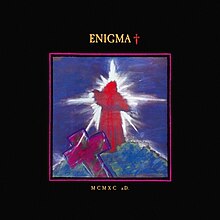
Enigma: MCMXC A.D.

Released in December 1990, the musical project Enigma's debut album quickly soared to the top of the charts to become the most successful album in the Virgin record label's catalogue at the time. The album has since received more than 60 platinum awards worldwide and by 1994 had already sold 14 million units.

Enigma: MCMXC A.D.

McMxc A.D. - Enigma

The album begins with 'Hello And Welcome' which features the iconic Enigma horn and the spoken voice bidding the listener a good evening, ushering the listener into a "world of music, spirit and meditation." Instantly noticeable is the New Age approach to music and through the spoken vocal part, a parallel spiritualistic motif.

The next track of the album consists of a medley of 'Sadeness,' 'Principals of Lust,' and a reprisal of 'Sadeness' each crossfaded together to create a continuous work. Throughout, dance beats are married with New Age style musical writing and overt sexual overtones from the vocal line. 'Sadeness' was to become the first single release from the album.

A later track, 'Mea Culpa' is written in a similar style to 'Sadeness,' using gregorian chant alongside dance beats and Shakuhatchi (often thought to be a pan pipe) writing, the style which Enigma used extensively throughout the 90's. The track uses lyrics written in french an latin and, in its single release, was titled 'Mea Cupa (Part 2),' referencing 'Sadeness' as part 1.

For its time and even now, this work was groundbreaking and established Enigma as a unique act with a highly unusual writing style which ultimately led to great commercial success.

For a review of Enigma's later greatest hits album, 'Love Sensuality Devotion,' click here.
McMxc A.D. - Enigma
Save on Delicious

Monday, 27 June 2011

John Metcalfe: A Darker Sunset

This little known work from 2008 by the obscure virtuoso violinist and electronic musician, John Metcalfe remains a rare curio in this reviewer's music collection but undoubtedly one of the highlights.


Throughout, the composer combines a writing style comparable to Air with more classical classical writing for acoustic instrumentation, displaying notable versatility from the composer. His talents as a violinist are also plain to see throughout but one of the stand-out tracks is undoubtedly 'The Shock Of Recognition.'

In addition to the composer's precise electronic writing, the extensive use of drum programming brings even greater credit to the album alongside the well refined use of synthesised melodic lines. Later in the album, the composer demonstrates an affinity to more ambient film music in tracks such as 'Higher, Lighter.' Overall this album presents a very appealing listen, well worth the time and certainly a purchase if a copy can be found.
Save on Delicious

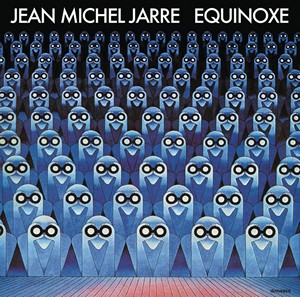
Jean Michel Jarre: Equinoxe

Following the breakthrough success of this French composer's previous album, 'Oxygene,' which is reviewed here, Jarre's 1978 followup continues stylistically where his last album left off. While the ripples sent through the musical world with his previous release are not echoed in this album, which comes at a time in which the synthesiser was becoming increasingly mainstream, Jarre's second major album presents an even more impressive portfolio than the composer's previous album.


The album itself contains a total of eight tracks which are, like 'Oxygene,' labelled as 'Part 1,' 'Part 2' and so forth but other than this and Jarre's style of writing, that is where the comparisons end. For one, 'Equinoxe' presents a wider sonic palette from Jarre and the album presents a more immediate progression between tracks, constructing a much clearer musical journey than the album's predecessor.

Among the highlights are parts 2 and 3, which constitute the majority of the albums A Side. In these tracks, there is a notable development from Jarre in his use of sequencing, with the bassline in part 3 being particularly interesting. Part 4 also introduces one of the most memorable musical material from the album and was released as the second single from this album.

The first single to be released was part 5 which, while it presents a highly exciting track, remains relegated by some as puerile for its composition style. The album concludes with a melancholy track, part 8, which exhibits typical writing for street organs which Jarre incorporates which playing live.

Overall, this album presents a significant development for Jarre and remains some of his finest work.
Save on Delicious

James Yuill: Turning Down Water For Air

'Turning Down Water For Air' is James Yuill's second album but first major release, initially released under his own label, the album was rereleased in 2009 following the composer's signing to the Moshi Moshi label. Consisting primarily of laptop-based sonic processing alongside guitar, cello and soft vocals, the album contains 12 tracks totalling 41 minutes.


The album sees a clear influence from New Order and similar synth pop groups, but Yuill's stylistic development to include more contemporary dance beats alongside influences from folk and electronica musics give this album a personality of its own. Among the albums highlights are 'No Pins Allowed' and 'No Surprise,' which were the first two singles to be released from the album.

With many of the tracks seemingly relating to Yuill's own personal experiences, much of the album is autobiographical with a continuous theme of longing and loss. This is seen in particular in the track 'Over The Hills,' the album's third single release.

This album comes fairly early on in the composer's career but shows James Yuill to be a particularly versatile and interesting artist with an inimitable style and great musical charisma.
Save on Delicious

Saturday, 25 June 2011

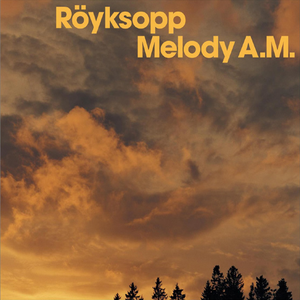
Royksopp: Melody A.M.

Royksopp are an Electronica duo which hail from Tromsø, Norway. The album here featured, 'Melody A.M.,' released in 2001, is the duo's critically acclaimed debut. Containing 14 tracks and a healthy 1:08 runtime [the US special edition is reviewed here], the album produces some memorable material, so much so that 'Eple' (meaning 'Apple') was even licensed by Apple Corp for the welcome music to OSX Panther.


One of the most interesting aspects of the album is the composer's ability to combine downbeat electronica which saw a great rise in popularity during the early 00's, with etherial electronic soundscapes. The textural complexity seen throughout the album also illustrates a high degree of compositional awareness from the duo not commonly seen so early in an acts' career.

The album from the very first track, 'So Easy,' exhibits an affinity with beat based electronica but the sombre string pad atmospheres seen in later material such as 'In Space' adds a further dimension to the album stylistically. In terms of the album's instrumentation and construction, there is a clear influence from the French duo Air (see the 'Love 2' review here) but further developing their sound with a catchier edge which has been met with popularity in the cases of 'Remind Me' and 'So Easy' to name just two examples.

Having extolled the virtues of the bands stylistic prowess, the final track, '40 Years Back/Come' presents a disjointed retrospect in two parts, ultimately concluding the album with a mysterious soundscape more common in Ambient music.
Save on Delicious

Friday, 24 June 2011

Enigma: 'Love Sensuality Devotion - The Greatest Hits'

The Enigma Musical Project is estimated to have sold in excess of 50 million albums and this 2001 greatest hits compilation release 'Love Sensuality Devotion' certainly contains some noteworthy material. The musical project themselves, led by Michel Cretu, is known for the New Age music influenced writing which combines dance and traditional chant elements, a highly original premise at the time of the act's debut.

Enigma: Love Sensuality Devotion
Love Sensuality Devotion - The Greatest Hits - Enigma


The album begins with the brief reference to the 'Enigma horn' which has featured on every album previous, before introducing 'Turn Around,' which in typical Enigma style combines electronic textures and vocals with world instruments, a strong shuffle beat and not forgetting the use of gregorian chants - a stalwart of the Enigma sound.

The Album continues to include the expected hits such as 'Sadeness Part 1' which was almost a worldwide number 1, alongside some Enigma's lesser known output. The album does however give a clear sense of intelligent design through the 'flow' and continuity throughout. Most of the album fuses New Age elements with Dance music beats which fans will have grown to expect but tracks that veer away from the dance influence, such as 'Principals of Lust' and 'Return To Innocence,' prove to be some of the most rewarding musical experiences of the album, certainly worth of a listen.


For a review of Enigma's debut release, 'MCMXC A.D.,' click here.
Save on Delicious